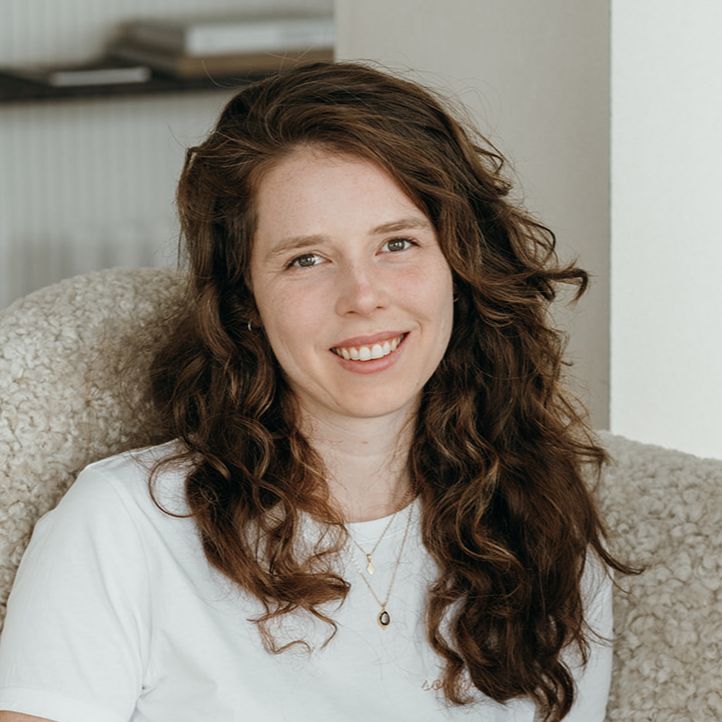
Changeworker of the Week #31: Anna Denardin on Art, Decolonization and Reimagining Sustainability Through Design
Apr 10, 2026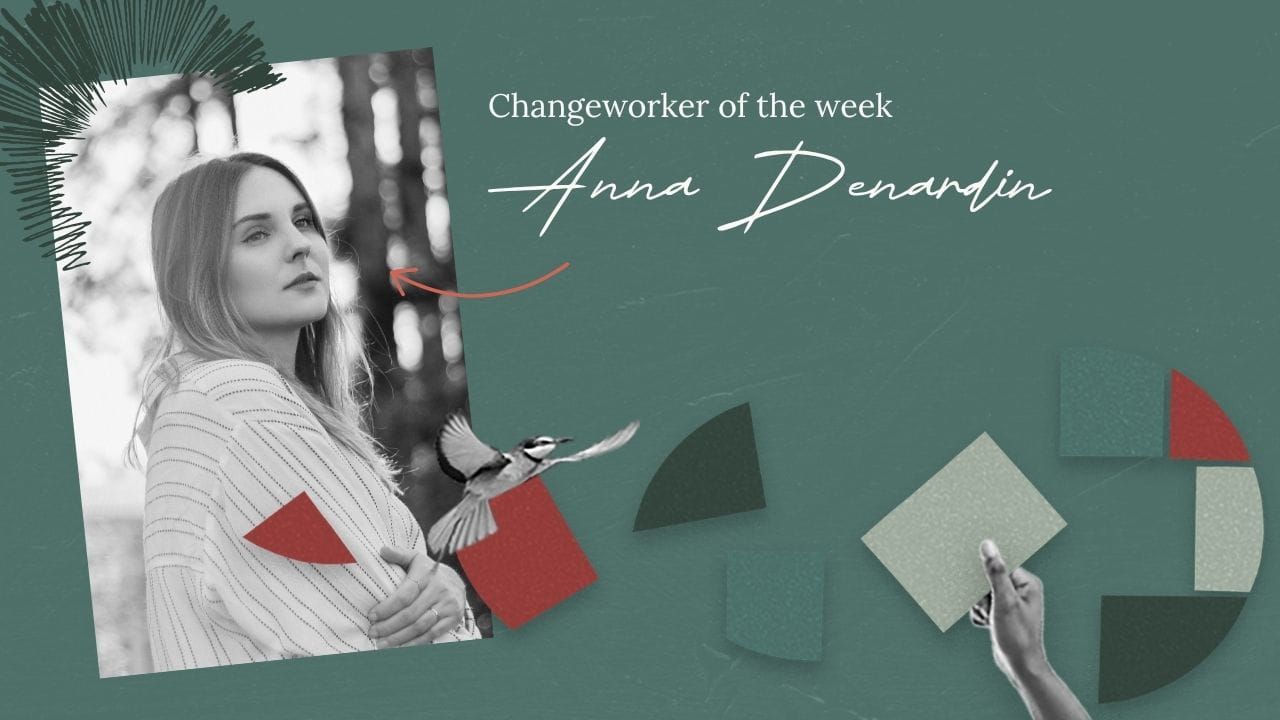
Anna Denardin, Designer, Facilitator and Creative Practitioner from Brazil, works at the intersection of art, sustainability, and decolonization. Through illustration and design, Anna reveals the cracks in harmful systems and supports those building alternatives to tell their stories with craft and creative depth. For her, art is not decoration. It is an entrance door: one that awakens what hyper-intellectual, solution-obsessed culture has numbed.
Through the #MyPieceForChange campaign, we invite people to share their unique contributions to collective transformation. This series exists to honor their stories, amplify their voices, and connect them with a wider community of like-minded peers. Today, we’re honored to introduce our Changeworker of the Week: Anna Denardin whom we had the pleasure of interviewing for this special spotlight.
What’s your piece for change?
I believe what's broken needs to be named and what's possible needs to be felt. I use illustration and design to reveal the cracks in harmful systems and help those building alternatives tell their stories with craft and creative depth. Design and art offer a different entrance door, one that awakens something our hyper-intellectual, solution-obsessed culture has numbed. I think art allows you to feel what a different world looks like before you can articulate it. That's where I want to work.
What inspired you to begin this work or stay committed to it?
I started as a civil engineer. From the beginning I wanted to focus my practice on something that could genuinely contribute to the context I found myself in. I was hungry for a sense of community and belonging, of being in right relationship, of feeling like I was contributing as much as I was gaining. That's what a healthy relationship with oneself, others, and the environment should feel like. That was the north star.
That search led me toward sustainability of the built environment, and eventually to a postgraduate program on cultural landscapes and Sustainability where I started investigating sustainability through a much more holistic, cultural lens of design thinking. That shift changed everything.
Looking at sustainability through a cultural lens made certain patterns impossible to unsee. I started questioning why almost all my references and frameworks were western and white despite being a Brazilian living in Brazil. I realized I was actively ignoring and downplaying far more contextually appropriate ancestral practices that were easily available to me in the Global South. Some things, once seen, cannot be unseen. That's when I started taking decolonization seriously as both a personal and professional practice.
Art and creative expression had always been a parallel current running underneath. Since I was young, drawing and illustrating were how I processed and communicated what I couldn't easily put into words since I was extremelly shy and antisocial. During my engineering years I used art as a formo f creative expression, since we didn’t have many avenues to use imagination freely. The pandemic became the moment I finally took it seriously as a practice and profession, shifting into graphic design, illustration, and facilitation. And suddenly the intellectual questioning and the creative practice started converging.
So that's what I'm interested in now: What is the role of art and creativity in helping different possibilities become clearer and imaginable? How can art become a playground where we experiment with anticipating what is yet to come? I think if we can recognize the harmful cycles we're operating from and actually do the work to heal rather than just manage symptoms, we might be able to act from a place of genuine health. And that's when we'd actually have a shot at creating the kind of systemic change that sustainability has been promising but rarely delivering.
What’s one hope or vision you hold for the future?
That we can collectively exorcise this self-centered drive toward individual success and competition that destroys everything around it in the process. If we can act from humility, acceptance, and genuine care for each other, that's the foundation everything else depends on. Our interventions can only go as far as our inner work goes.
And if the shift we need is fundamentally about paradigm and posture, then art has an enormous role to play. We're currently operating from a paradigm that runs on data, certainty, and control. Art bypasses the defenses, reaches something pre-rational, and can make a different way of being feel real before the mind has caught up. That's not a small thing.
What support or connection are you currently looking for?
I'm looking for collaborators who resonate with this approach: people and organizations doing values-driven work who want to explore what becomes possible when design and creative expression are taken seriously as tools for change, not just communication.
That includes co-creators interested in experimenting with new forms of expression, and fellow practitioners in adjacent fields who want to think together and cross-pollinate.
What’s one thing about your field or topic you wish more people knew, considered, or acted on?
Self-interrogation. The sustainability and impact fields are saturated with egoic saviorism, the sustainability missionary is a real archetype. There's a crucial difference between living by your values and treating those values as a moral blank check that justifies the harm you cause along the way. History is full of people committing enormous suffering in the name of civilizing, developing, or saving others.
When you're attached to the identity of being on the right side, self-interrogation stops. Good intentions become a shield rather than a starting point. And that's when things get dangerous.
This is where art and expression have something important to offer as a practice of returning to authenticity. Of feeling the gap between who we say we are and how we actually move through the world.
What practices, tools, or resources have supported you most on your changework journey?
Books and articles have helped — Fanon, Grada Kilomba, Tema Okun. But the unlearning has been as important as the learning.
The inner work is harder to name but more foundational: recognizing how my ego drives me toward things I don't actually align with. Knowing my triggers and patterns. Taking active steps to interrupt the ones I want to stop. Getting better at admitting mistakes, repairing them, and making sure they don't just repeat.
What I've noticed is that when I grow internally, my external interventions get sharper. I can see more clearly. And I've made peace with the fact that this is a lifelong thing, not a destination.
Can you share a moment or experience that deeply shaped the way you approach change today?
The moment I saw I was replicating the very patterns I wanted to address in ways I couldn't see... until I could.
Good intentions, it turns out, don't offer a shield. When I was honest enough to look at my actual choices rather than my stated values, I could see white supremacy patterns in my own behavior. That was humbling in a way that permanently changed my posture.
I let go of any attachment to being an expert and assumed the position of a learner, which doesn't mean minimizing my skills, but recognizing they are forever incomplete. I became less certain about what the right answer is, and more attentive to context. Each situation is different. Each intervention is different. Each experiments offer pathways for learning. That’s the point.
What collective shift do you believe is needed for meaningful change to happen and what gives you hope that it’s possible?
I've already touched on the inner shift toward humility and genuine care, so I won't repeat it here. On hope, honestly, hope isn't that central to how I operate. I know different ways of living are possible because they already exist. There are many people living outside the modern western framework who already inhabit ways of being that are more sustainable and more relational. The possibility is real and present.
Whether it becomes mainstream, I can't control. What I can do is my part. And if the external impact never reaches the scale needed, at least I'm becoming a better human in the process. That feels like enough to keep going.
How do you take care of your own energy or wellbeing while doing this work?
Honestly, not as well as I should. It's genuinely hard to build alternatives to systems while still depending on those same systems for legitimacy, access, and income. The romanticization of changemaking is its own problem, it obscures how exhausting and contradictory the work actually is.
What helps: stepping away from screens, immersing myself in my actual context, embodied practices. Trying to keep work and rest from becoming completely indistinguishable though I won't pretend I've figured that out.
Where can people learn more about your work or connect with you?
- Website: www.wci.design
- Instagram: @annadenardinart or @wci.design
- LinkedIn: Anna Denardin or World Changing Ideas
- Behance: WCI Design
The Parayma community is rooted in authentic, supportive relationships.
Anna’s changework invites us to feel before we fix.
If you are building alternatives and want to explore what art and design make possible, consider reaching out!
Thank you, Anna, for your powerful #PieceForChange.
Ready to share yours? Submit your story and join the movement.
Seed, Root, Bloom, or Harvest?
Take the Quiz!
A short reflective quiz to find your season of changework.
Subscribe to The Changework Journal
Get first access to new offers, free or discounted tickets to events Nora speaks at, exclusive access to funding opportunities we source from our network (not shared anywhere else on our channels), and more!