Changeworker of the Week #18: Sage Kuehn, Climate Change Activist from Canada
Nov 28, 2025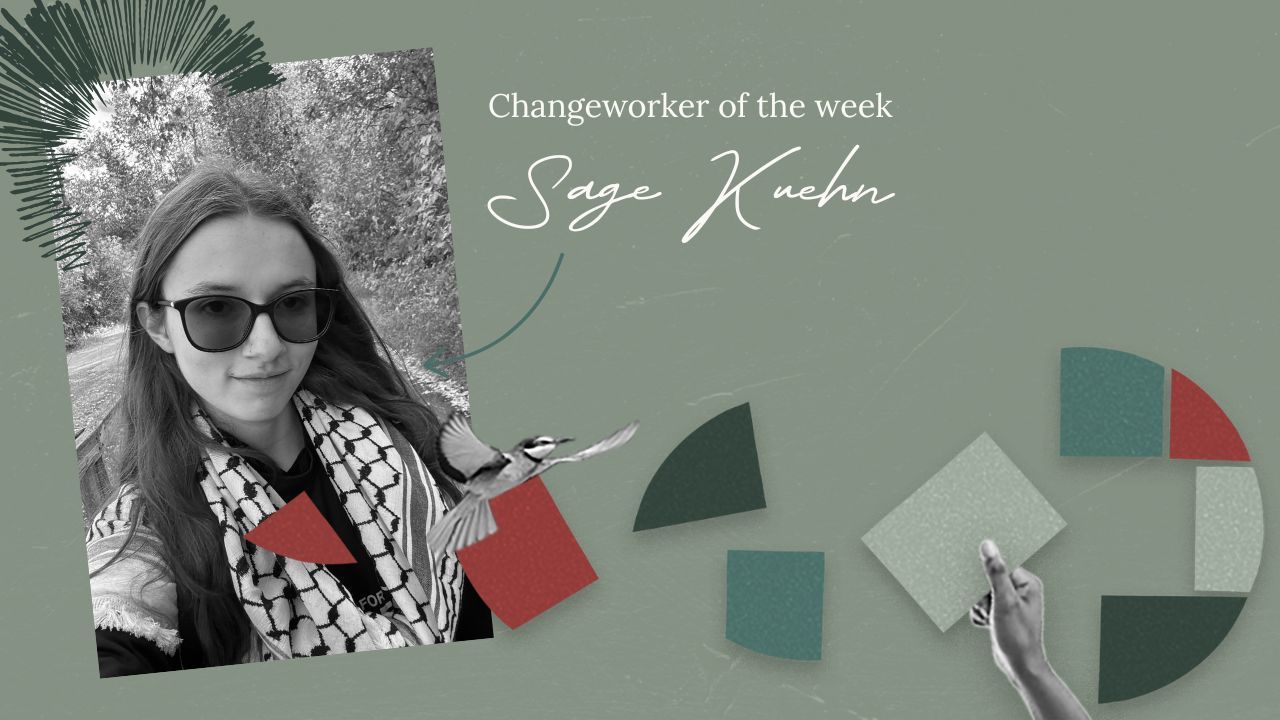
Sage Kuehn, Climate Change Activist from Canada is part of a new generation of changeworkers reshaping how we respond to the climate crisis: not with despair or disconnection but with intersectionality, solidarity, and systemic imagination.
Her work calls for a transformation that is both deeply human and structurally bold, rooted in the belief that our well-being is inextricably linked to planetary healing and that real change begins when we act with others, not in isolation.
Through the #MyPieceForChange campaign, we invite people to share their unique contributions to collective transformation. This series exists to honor their stories, amplify their voices, and connect them with a wider community of like-minded peers. Today, we’re honored to introduce our Changeworker of the Week: Sage Kuehn whom we had the pleasure of interviewing for this special spotlight.
What’s your piece for change?
I want to help societies mitigate climate change by creating opportunities to help transform our systems to better benefit all people around the world.
What inspired you to begin this work or stay committed to it?
When I started high school, I experienced very intense climate anxiety. I only knew how to cope with this by avoiding the issue, so that’s what I did for a long time. Eventually, after hearing Katharine Hayhoe speak about how to come at climate action from a place of hope and not fear, I finally found a way to quell my anxiety. Ever since then, I’ve been working to find the ways I can be most helpful to the climate movement and learning all that I can.
What’s one hope or vision you hold for the future?
My hope is that people can begin to realize that at our core, most of us want the same things for each other. We all want to be comfortable, to have good food and be around people that we love and do things that fulfill us. I think that when we begin to realize that we do not have to live in the current extractive systems to achieve these things, and that by consuming less, we may actually be a lot happier, great things can happen.
What support or connection are you currently looking for?
I am very lucky to have a strong community of climate activists around me both in my area and online. However, I’m always eager to connect with other young people who are interested in the movement for the first time. I think that despite how welcoming the space can be, it’s often overwhelming, especially for young people, and we need to support each other in finding ways to address these big issues.
What’s one thing about your field or topic you wish more people knew, considered, or acted on?
I wish more people in my field considered the intersectional nature of environmentalism. While there are many scholars, activists and knowledge- keepers who write and speak on these topics, I find that in my classes, these issues are often overlooked. In some areas especially, like environmental economics and policy, issues such as indigenous rights, environmental protection, and social impacts are not considered when making decisions that will affect our environment. This leads to people who are supposed to be advocating for our environment only make improvements through technology and efficiency changes, rather than taking advantage of the system changes we need to make our world sustainable and just.
What practices, tools, or resources have supported you most on your changework journey?
Learning about intersectionality has helped me decentralize my own experience of climate change and anxiety and help relate climate change to other environmental issues. I would recommend learning from environmentalists who write about environmental racism, ecofeminism, indigenous environmentalism, and all the other connections between the exploitation of people and the natural environment. The Intersectional Environmentalist by Leah Thomas is a great place to start.
Can you share a moment or experience that deeply shaped the way you approach change today?
Learning about the ongoing genocide in Palestine has deeply shaped the way I approach change in multiple ways. There was some discourse around Greta Thunberg’s advocacy for Palestine, many stating that she had ‘abandoned the climate movement’. However, I think that she, like many others, has realized that climate change and colonialism were not separate issues, they are powered by
the same exploitative and extractive systems. When I made these connections, it helped me understand the deeper reasons as to why I’m a climate activist and why change is so important to me. I think Greta says it best; “I am not a climate activist because I want to save the trees and the frogs… I am a climate activist because I care about human as well as planetary well-being”.
What collective shift do you believe is needed for meaningful change to happen, and what gives you hope that it’s possible?
I think that people need to understand their communities and their neighbors and be able to work with them to find local solutions to global problems. I don’t think there is a silver bullet to any of the issues climate change produces, but if we all take the mindset that the solutions to our problems our within our communities, not within billionaires or companies or technology alone, I think we can do a lot.
How do you take care of your own energy or wellbeing while doing this work?
I try to surround myself with people who value people and the environment in the same way that I do, as it makes me feel more understood when I am stressed out about the state of the world, and like my activism and worldview is valued by those I love. I also make an effort to talk about issues that matter to me with pretty much everyone I know (probably to the annoyance of my friends), which helps me process and understand what is happening in the world. It can get really big and in your head when you’re dealing with this alone, and by talking with others and sharing knowledge, you can both help take care of yourself and power the movement.
Where can people learn more about your work or connect with you?
Connect on Instagram @sajekeen
The Parayma community is rooted in authentic, supportive relationships.
The Parayma community is rooted in authentic, supportive relationships.
If Sage’s story resonates with you: if you’re also navigating climate anxiety, working through systems change or seeking intersectional community, reach out and connect
🌿Thank you Sage for sharing your #PieceForChange and reminding us that climate justice is not just about the planet: it’s about people, solidarity and how we choose to show up for each other.
Stay tuned for next week’s Changeworker feature, and if you’d like to be highlighted, join the campaign and tick the box to express your interest.
Now Enrolling
Changework Compass
The programme that helps you name your unique contribution - and build the confidence, clarity, and skills to bring it, without burning out in the process or doing it all alone.
Book your spot today in the Fall Cohort. 35 spots only.
Starting on September 14th. We’d love to have you with us!
Subscribe to The Changework Journal
Get first access to new offers, free or discounted tickets to events Nora speaks at, exclusive access to funding opportunities we source from our network (not shared anywhere else on our channels), and more!