Changeworker of the Week #21: Ikram Hirse, Founder of Mimbar360 & Designer of Community Futures
Jan 23, 2026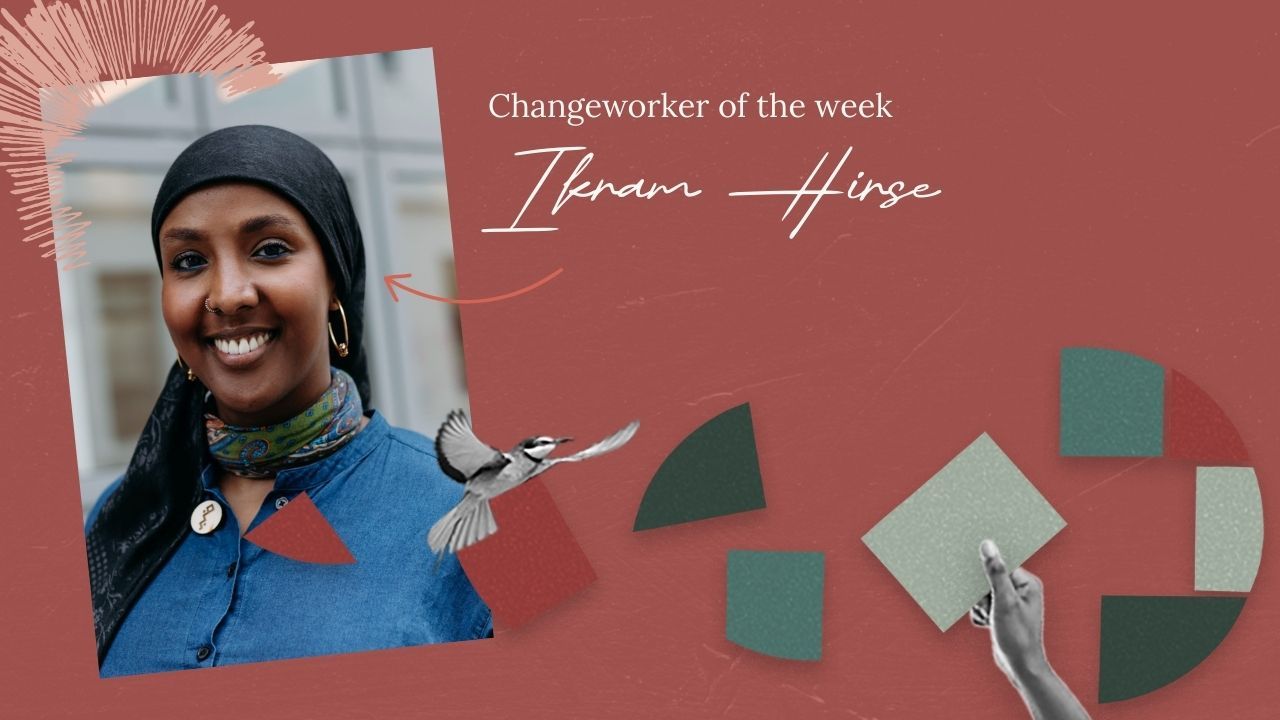
Ikram Hirse, founder of Mimbar360, is quietly transforming how we imagine Muslim faith spaces not just as physical structures, but as ecosystems of belonging, beauty, and emotional refuge .
Her work lives at the intersection of design, spiritual care, and collective memory, asking: what if mosques were places of healing, not just worship?
Through storytelling, participatory research, and Islamic-informed design, Ikram is building a movement toward spatial justice and sacred spaces that nourish the nervous system, not just the soul.
Through the #MyPieceForChange campaign, we invite people to share their unique contributions to collective transformation. This series exists to honor their stories, amplify their voices, and connect them with a wider community of like-minded peers. Today, we’re honored to introduce our Changeworker of the Week: Ikram Hirse whom we had the pleasure of interviewing for this special spotlight.
What’s your piece for change?
My piece for change is Mimbar360, a quiet but steady invitation to reimagine Muslim community spaces as places of belonging, beauty, and emotional refuge. Through design, storytelling, and participatory research, I work to shift how mosques and faith spaces are understood: not just as buildings, but as living ecosystems of care, culture, and collective memory.
What inspired you to begin this work or stay committed to it?
It began with a simple observation: our mosques' spaces hold so much possibility, yet so many people feel unseen within them. Growing up between different worlds, I learned early that architecture is never neutral. It can heal or it can harm. Staying committed feels less like a choice and more like an inheritance; a responsibility to honour the past while carving room for new futures.
What’s one hope or vision you hold for the future?
That every mosque whether tucked between terraced houses or standing boldly on a high street becomes a sanctuary of emotional wayfinding, community dignity, and imaginative possibility for everyone. A place where people feel welcomed as their full selves, not only as worshippers but as neighbours, learners, seekers.
What support or connection are you currently looking for?
I’m always looking to connect with architects, designers, neuropsychologists, placemaking organisations, and community leaders who believe in a more human-centred future for faith spaces. Partnerships that are collaborative rather than extractive, and funders who understand that cultural change takes time, trust, and long horizons.
What’s one thing about your field or topic you wish more people knew, considered, or acted on?
That the design of a space is never just about form; it shapes our nervous systems, our relationships, and our sense of possibility. Form follows function is symbiotic relationship and interconnected. Spatial justice isn’t abstract; it shows up in how safe we feel in a hallway, whose stories are displayed on a wall, and who is invited to the table when decisions are made.
What practices, tools, or resources have supported you most on your changework journey?
A blend of Islamic psychology, neuroarchitecture, design thinking, and the slow, attentive practices borrowed from chaplaincy. References from The Quran, prophetic approach to community building, Heart of Design by Peter Gould, The Art of Gathering,Creative thinking from the islamic perspective, and writings on regenerative design continue to anchor me and always, walking especially near water helps me return to clarity.
Can you share a moment or experience that deeply shaped the way you approach change today?
In my mid-twenties, during a restless period of soul-searching, I found myself quietly tending to a small prayer room at work where I would take the garments of the weekend to was, before work cleaning the room once a each week, caring for it in the way one cares for a refuge. It became a place of steadiness, a way of staying connected when everything else felt in flux and heavy.
When I left that job, I searched for the same sense of grounding in local mosques. I volunteered, reached out, waited and rarely heard back. That silence stayed with me. It made me realise that access shouldn’t depend on who you know or how persistent you are.
Change, for me, begins with opening doors that have been closed to women in these spaces.
What collective shift do you believe is needed for meaningful change to happen, and what gives you hope that it’s possible?
We need to move from “fixing buildings” to “cultivating cultures.” From consultation as a tick-box to participation as a shared practice. What gives me hope is how many young Muslims, designers, and community workers are already working in this direction, often quietly, often without recognition. Their vision is luminous.
How do you take care of your own energy or wellbeing while doing this work?
I retreat into slowness whenever I can long walks, journaling when inspired, visiting anywhere with water, grounding through prayer (salah), and keeping my nervous system in conversation rather than conflict. I’m learning the discipline of rest as an act of design for myself.
Where can people learn more about your work or connect with you?
Connect via:
-
Website: www.mimbar360.com
-
Instagram: @Mimbar360
-
LinkedIn: Ikram Hirse
The Parayma community is rooted in authentic, supportive relationships.
The Parayma community is rooted in authentic, supportive relationships.
Ikram’s changework is a powerful reminder that the spaces we shape and are shaped by carry meaning. When we design with care, we don’t just build structures, we restore connection, belonging, and dignity.If you’re reimagining sacred, shared, or healing spaces, reach out and connect 🌿
Thank you, Ikram, for your leadership and your #PieceForChange.
Stay tuned for next week’s Changeworker feature, and if you’d like to be highlighted, join the campaign and tick the box to express your interest.
Seed, Root, Bloom, or Harvest?
Take the Quiz!
A short reflective quiz to find your season of changework.
Subscribe to The Changework Journal
Get first access to new offers, free or discounted tickets to events Nora speaks at, exclusive access to funding opportunities we source from our network (not shared anywhere else on our channels), and more!