How my childhood taught me that regenerative economic systems are possible
Jul 24, 2026
Imagine growing up surrounded by nature and its rhythms, knowing your neighbours by name, feeling held by family and community. Imagine learning about responsibility not as an abstract concept, but from caring for animals, land and one another. Sounds idyllic — almost too good to be true?
In German, there is an expression for this kind of childhood: “to grow up like in Bullerby.” It is inspired by The Children of Bullerby by Swedish author Astrid Lindgren — stories of six children growing up in a small rural village in Sweden. Their everyday life is simple but rich: shaped by freedom and responsibility and a deep closeness to nature. Nothing extraordinary happens and that is precisely the point. Life unfolds through relationships, routines and a strong sense of belonging.
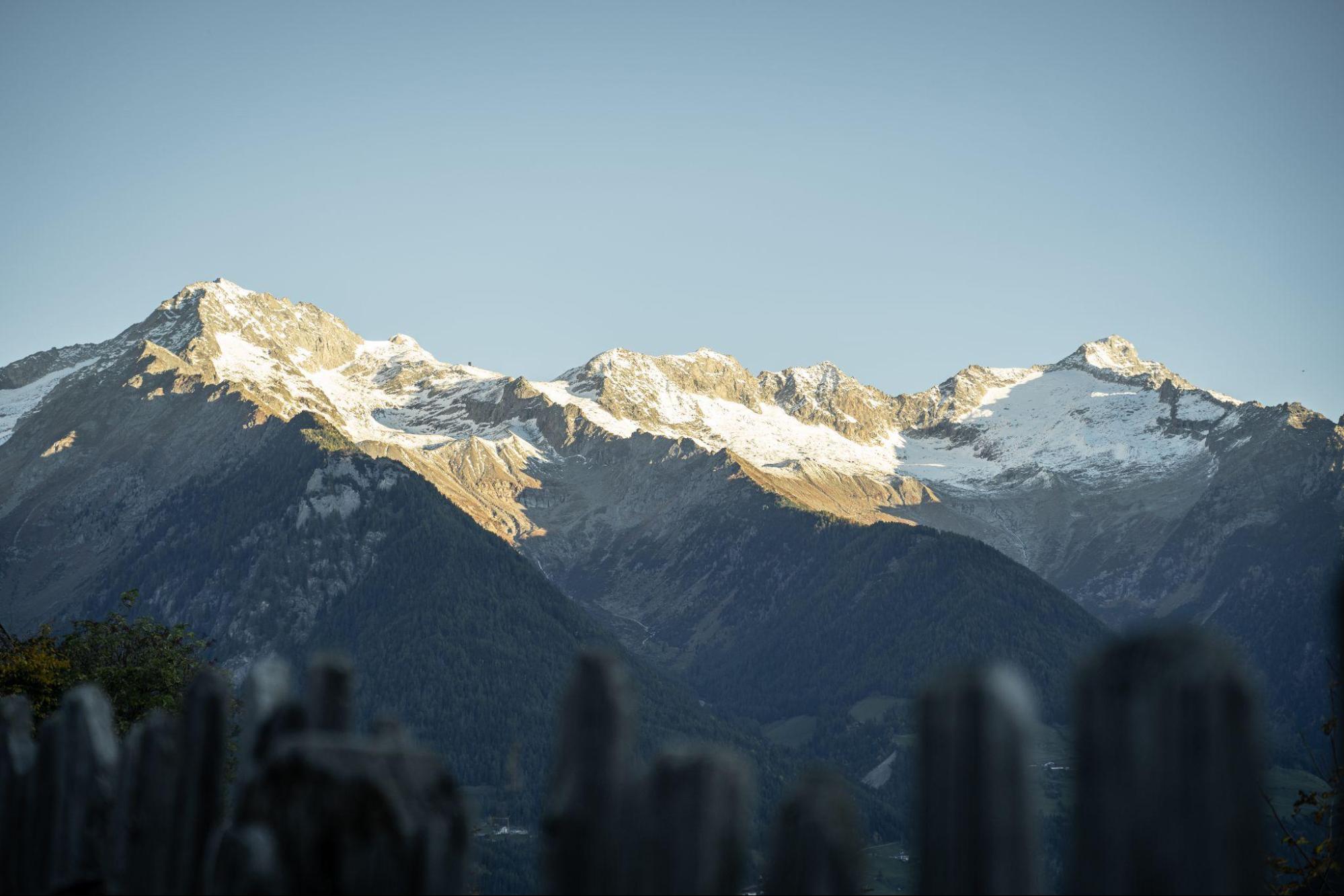
An image of the stunning nature in the midst of which I grew up | © Schüsslerhof 2022
When I think of my own childhood, this expression comes very close.
I grew up on a small mountain farm in rural South Tyrol. I am the youngest of five siblings, and my parents worked tirelessly to give us children a good life. The farm came to my mother under tragic circumstances: her eldest brother, who was meant to inherit it, died young. Starting from modest means, my parents gradually built something that went far beyond economic survival.
Over the years, they created a living system. They opened holiday apartments and cultivated a culture of hospitality so warm that guests from all over the world felt genuinely welcome. They built animal housing based on progressive standards of animal welfare. They planted a permaculture garden shaped by biodiversity, where traditional and medicinal plants grew side by side. And eventually, they opened a restaurant — a step that ensured economic stability and allowed the whole system to endure.
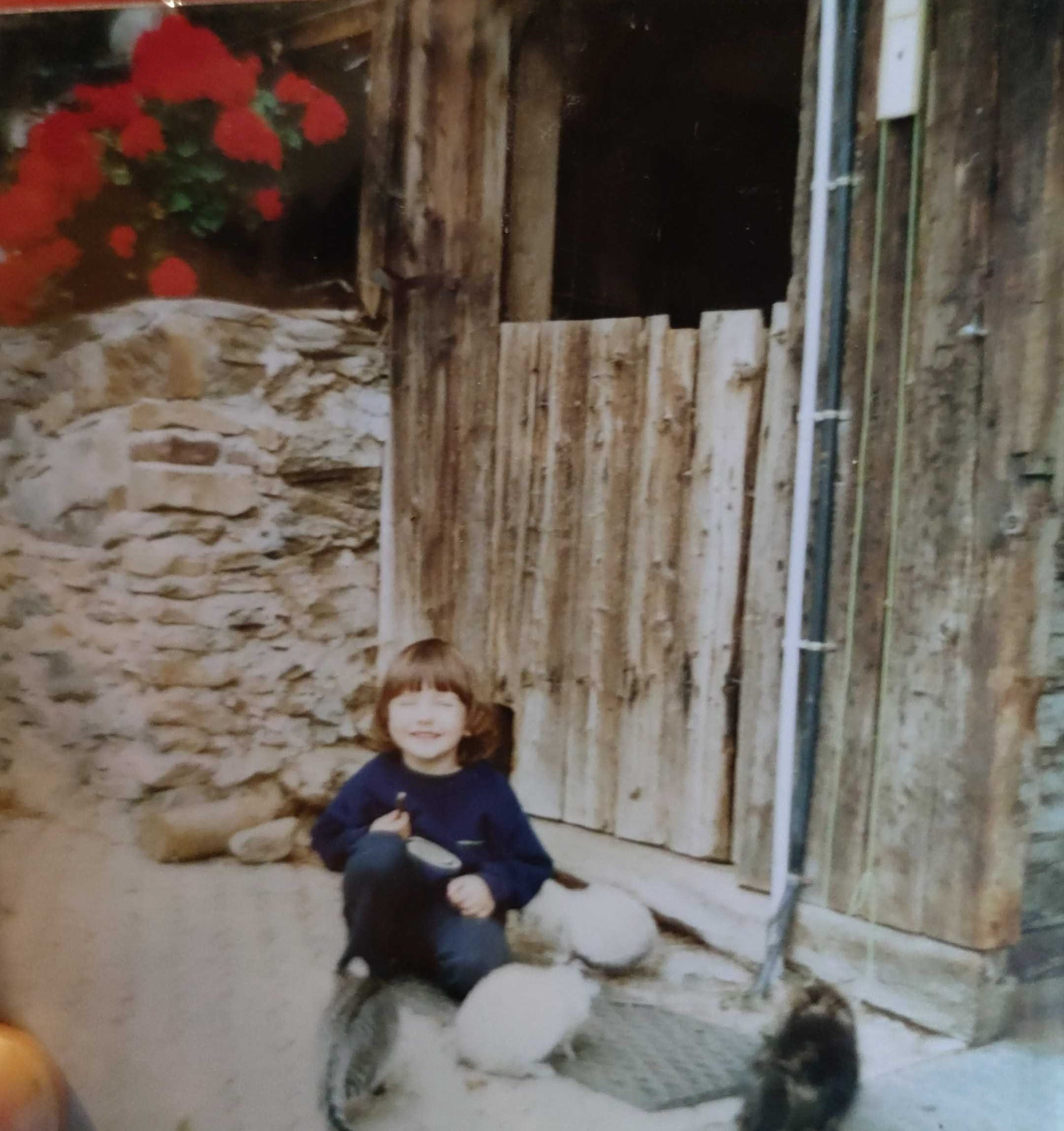
Myself as a kid in the midst of a bunch of cute kittens - that’s how life looks like, when you grow up on a regenerative farm | © Private, Lena Obermair
They rarely used words like ecology, sustainability or regeneration. But what they practised was exactly that.
Growing up there, I learned responsibility as something embodied, not abstract. I learned that systems remain healthy when relationships are cared for — between people, animals, plants and land. I learned that abundance does not come from extraction, but from balance and attentiveness.
Much of my childhood unfolded outdoors. I learned to observe seasons and weather, animals and soil. I learned which plants support one another, how thoughtful crop rotation keeps soil fertile over time, how small decisions accumulate into long-term effects. I absorbed knowledge passed down through generations — how to read clouds as indicators of changing weather, when to harvest or cut wood in rhythm with natural cycles, how deeply human life is entangled with ecological systems.
Equally formative was working together as a family. Bringing in hay, caring for animals, harvesting and drying herbs, cooking in the restaurant kitchen. Work was not separate from life; it was part of belonging.
This way of growing up shaped me deeply. To this day, I feel a strong connection to nature, to plants and animals. I carry a sense of stewardship — a responsibility to contribute to systems in which life can flourish. Long before I had language for it, I grew up in a regenerative system that intuitively maintained balance.
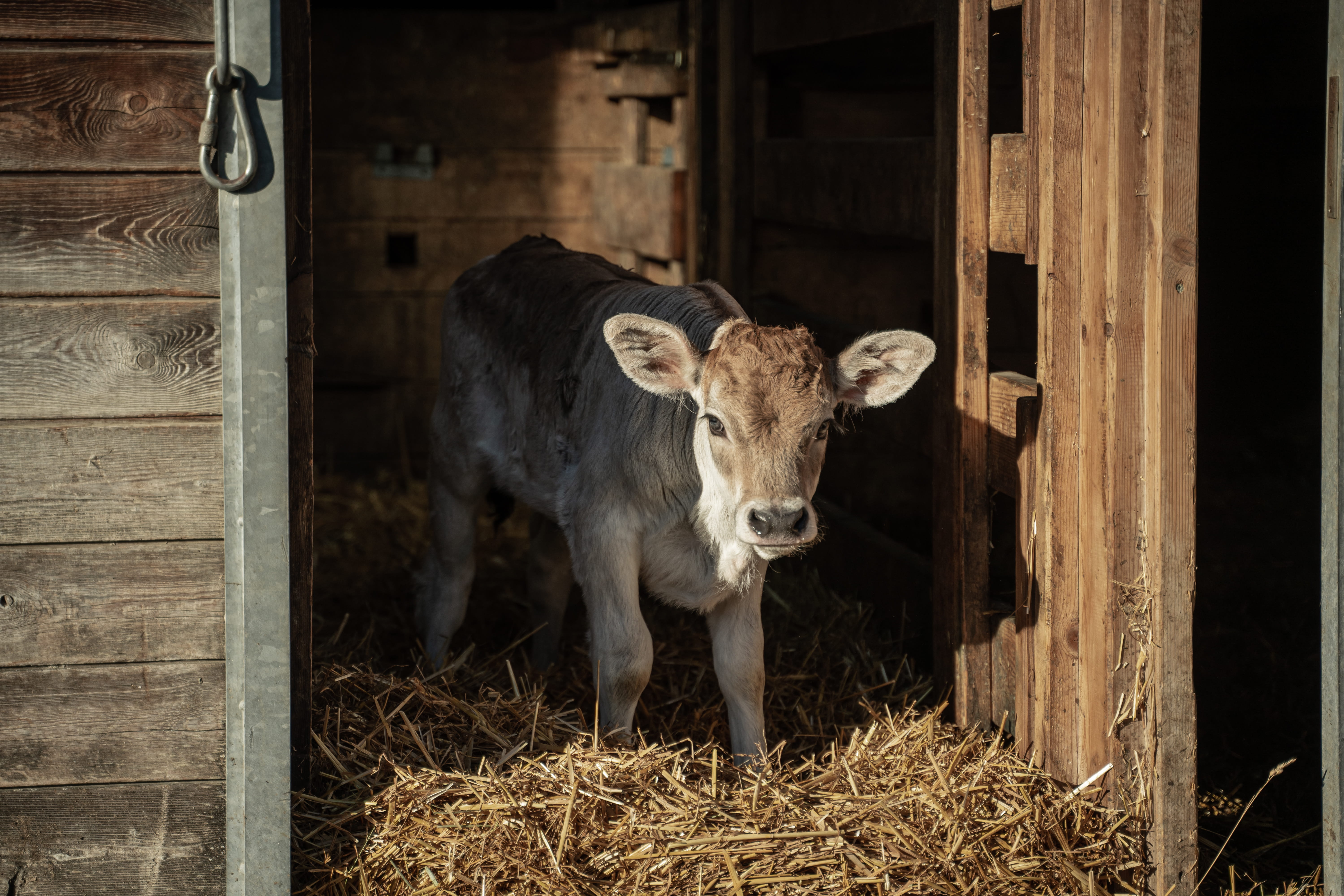
© Schüsslerhof, 2022
For a long time, I assumed this was simply how the world worked.
That assumption began to unravel during my teenage years. I remember reading a book about factory farming — about the scale of animal suffering and environmental destruction it produces. I was shaken to my core. I decided at that moment to become a vegetarian, which I have been ever since. But the more I learned, the more my sense of safety fractured. I began to see how global inequality, environmental destruction and exploitation were not accidents, but patterns. How cheap clothes, fossil fuels and industrial food systems were built on invisible suffering. How women*, children, People of Colour and other marginalised groups were systematically disadvantaged.
I felt overwhelmed, paralysed and deeply confused.
How could the world at large function so differently from my small microcosmos?
What hurt most was the feeling of powerlessness. I lacked an understanding of systemic causes, and I lacked agency — any sense that I could meaningfully influence what was happening.
This inner tension took its toll. Outwardly, I functioned: excellent grades, engagement in student groups, motivation. Inwardly, I was at my limit.
This period marks an important turning point in my story.
Because it showed me that awareness without agency can be destructive.
What helped me slowly find my footing again was not withdrawal, but connection.
I moved to a city for my studies, and through feminist spaces and civic engagement, I encountered language and frameworks that allowed me to connect the dots. Ecological crises, social injustice and economic structures were not separate problems — they were deeply intertwined. I witnessed how isolated or purely technical “solutions” often failed because they addressed symptoms rather than root causes. You cannot “fix” agriculture without touching economics. You cannot address climate change without addressing power imbalances, capital distribution and the logics of value creation.
Of course agriculture, tourism, energy or mobility are all crucial subsystems. But gradually, it became clear to me that the economy is the overarching logic that shapes them all. It determines what is considered viable, what is rewarded, and what is pushed to the margins.
If we want to change how we relate to nature, to work and to one another, we have to change how we organise value creation itself.
This realisation influenced my future substantially. I knew I did not want to work only within one sector. I wanted to engage at a level where many systems intersect — and I found myself, at this stage of my life, with the capacity to do so.
That is what eventually led me to Impact Hub Tirol.
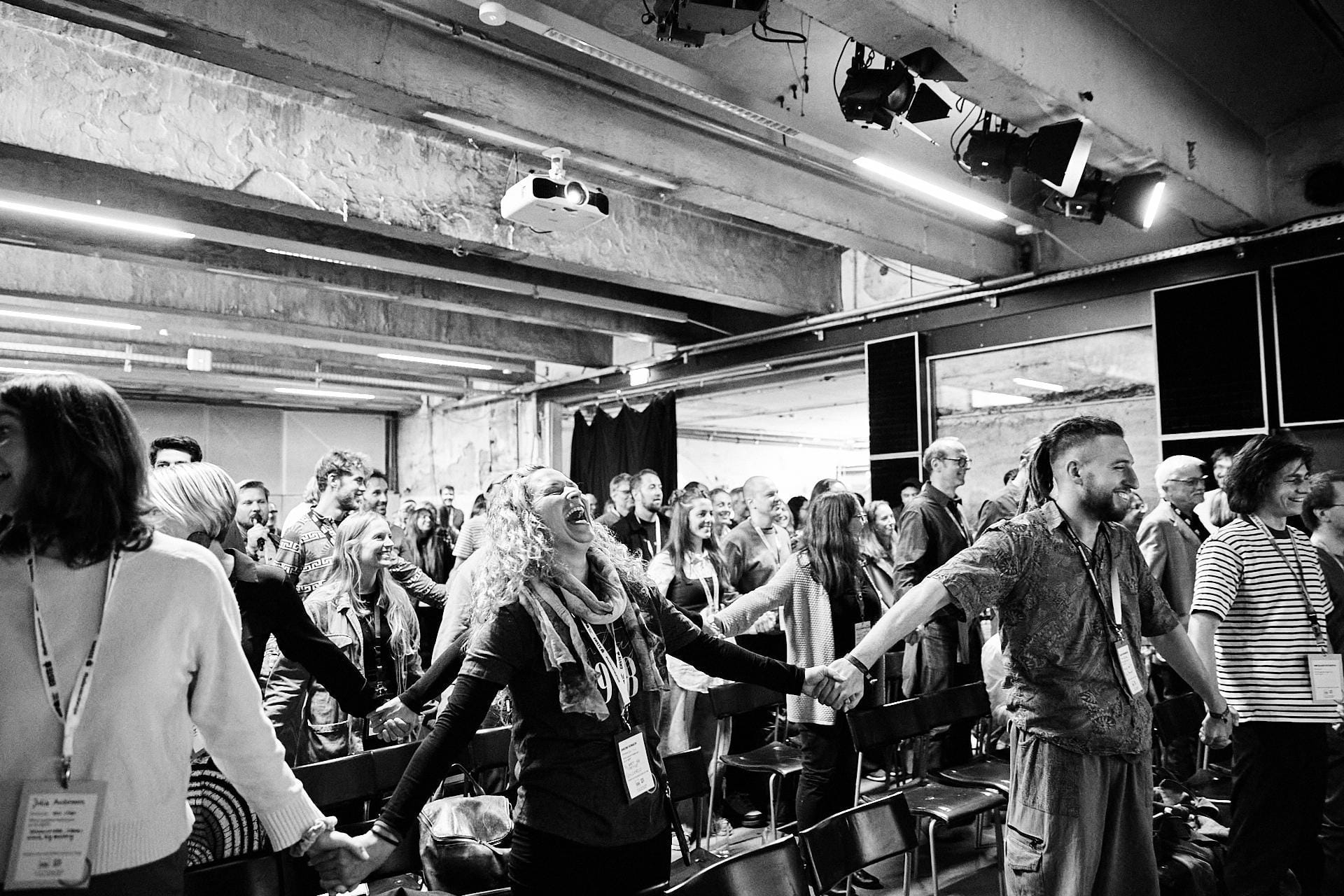
A community of belonging. Shot of an Impact Hub Event | © Impact Hub Tirol | Verena Nagl, 2025
The Impact Hub Tirol is part of a global network working towards an impact-driven economy. But for me, it is more than an organisation or a workplace. It is a space where a different logic of economy can be practised collectively.
What my parents built intuitively on a small mountain farm, the Impact Hub seeks to build intentionally and at scale: systems that are economically viable, socially rooted and ecologically regenerative.
At its core, impact entrepreneurship means using entrepreneurial tools to create value for society rather than extracting it. It is about designing products, services and organisations that ask not only “Does this bring the most profit?” but “Who and what does this allow to thrive?”
The Impact Hub supports people who are willing to ask that question seriously. We accompany individuals and initiatives in their development, we build a community with real agency through participatory governance, and we increasingly focus on systemic impact — connecting many good projects into structures that can endure economic uncertainty and political crises.
Let me give you an example: Tourism is a sector in our ecosystem that profoundly shapes landscapes, livelihoods and local identities. Now, rather than focusing only on isolated measures such as bed caps or encouraging more sustainable travel behaviour, we at Impact Hub step back and ask more fundamental questions: How much tourism can a region actually sustain? Who benefits from the value it creates — and who bears the costs? By acting as bridge-builders and bringing together municipalities, businesses, civil society and residents, we work towards long-term, regenerative tourism models that serve people, place and planet together.
Working in this space has deepened something I learned early on: systems do not change because individuals are perfect, but because relationships are reconfigured.
We are still at the beginning of this journey. Building regenerative economic systems is complex, slow and often uncomfortable work. There are moments when short-term thinking and global crises make it tempting to lose hope.
And yet, I know — from lived experience — that different systems are possible.
I grew up in one. And today, I see people around the world, in many different contexts, building them too — in communities, organisations, businesses and institutions.
The question is not whether regenerative systems can exist, but what allows them to grow beyond isolated examples and become real alternatives to dominant models. What they need are strong collaborations and honest spaces for co-creation across sector boundaries. They need capital to grow and flourish. They need communities where people practise giving and receiving as essential forms of belonging. And they need the shared understanding that none of us is working alone — that across places and disciplines, countless people are already committed to shaping a more life-sustaining world. When these people are connected, supported and able to move together, their collective impact becomes impossible to ignore.
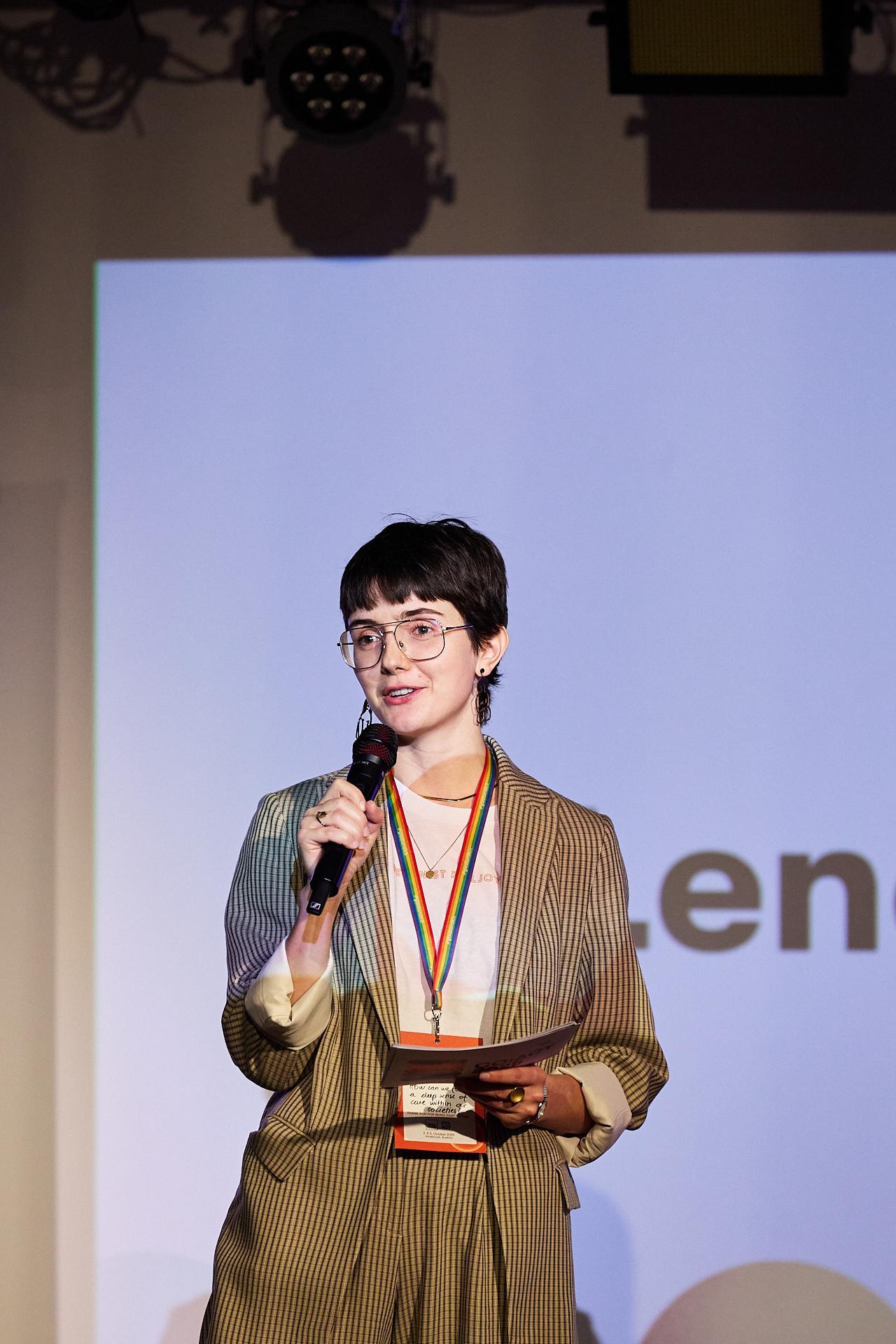
Myself, holding a speech at a systems lab, that we hosted with Impact Hub Tirol - bringing together actors from different sectors to collaborate on common goals | © Impact Hub Tirol | Verena Nagl, 2025
This is not a call for heroism or individual perfection. It is an invitation to participation. To seek out or build communities of belonging. To invest time, trust or resources in initiatives that create social and ecological value. To collaborate across differences and contribute to economies that give back more than they take. Systems change does not happen through single breakthroughs, but through many people choosing, again and again, to organise life differently — together.
It is worth committing to systems that allow life to flourish. It is worth believing that a different economy is possible. So that many more children, in many more places, can grow up experiencing a “Bullerby childhood”.
Paryma Fellowship
-
Learn more about the Paryama Fellowship →
-
Get to know the Parayma Fellows →
-
Support the Parayma Fellows →
Seed, Root, Bloom, or Harvest?
Take the Quiz!
A short reflective quiz to find your season of changework.
Subscribe to The Changework Journal
Get first access to new offers, free or discounted tickets to events Nora speaks at, exclusive access to funding opportunities we source from our network (not shared anywhere else on our channels), and more!