Prickle and Tickle Your Gifts, Not Needs: What We Have May Already Be Enough.
Sep 25, 2026
When I was 6, my family moved to Ile-Ife, the cradle of Yoruba land, Osun State, Nigeria.
First, I want you to imagine one red food flask and three children (myself and two siblings). We attended the same primary school where my dad worked as a Science Teacher.
The red food flask, with red-looking beans inside, stays hot past midday. When it's lunchtime, the three of us would wait our turns for the food flask, the way you wait for something sacred.
Beyond carrying our lunch, the food flask also represented love. The laughter we shared was enough to fill many rooms, and the food was enough to keep us strong and healthy. All that was enough.
My dad had a motorcycle that carried us to school. Some days, the bike refused to work, so we'd trek to school. After all, it was only about three kilometres there, three kilometres back. Later on in life, I realised those moments taught me something that the classrooms didn't teach, and this is that in real life, movement matters more than just the mode of transportation. For the teachers, the main thing each school day is that you're present in the class; it doesn't matter if you came by aircraft, by motorcycle or on foot. I wish the subjects, like mathematics and social studies, were taught back in primary school in ways that explained why, what and how life works.
After primary school, I attended one of the best secondary schools in town for two years before the school fees climbed higher than my parents' income could match. So I moved to another school. Yes, sometimes I was sent home when the fees came late, but I never carried that home as shame. I carried it home as a question. The question was simple. If I cannot control the income of my parents to pay the school fees on time, and for me to go to school every day, what can I do with what is at home?
So I made friends with the night. I would sleep around 8 pm and wake up by 1 am, and I would read until daybreak. I would dig into old textbooks used by my parents and siblings, lying around the house, which became a treasure. The dictionary became a fruit basket, and I ate the words in it slowly, then with hunger. I solved maths problems no teacher had asked me to solve. I just had a thing for learning and finding ways to apply it.
Right there in the dark and just being a stubborn and curious boy, I had given birth to something, even though I didn't know it yet. Those nights taught me the lesson that has shaped one of my life missions – what we already have is enough. The trouble is that nobody teaches us how to pause and take a look.
The Seed of Curiosity Keeps Asking Me To Be More.
I took that same template of curiosity, used it all through to finish Secondary School, eventually becoming the Senior Prefect Boy in the final year - this was my first taste of structured leadership. I was expected, alongside other prefects, to ensure that 600+ students showed up and left the school every day in their best behaviour.
I got admitted into Obafemi Awolowo University (OAU), Ile Ife, and I landed in the Faculty of Education, back then, in the department of Special Education and Curriculum Studies, to study Biology Education. I tried to leave that department, even though both of my parents were teachers; I believed the prestige and income for teachers were just too low for the kind of life I desired in the future. I just don't want a repeat cycle of being sent home for late payment of school fees.
After university, the compulsory 1-year National Youth Service in Nigeria sent me to a quiet, caring rural community in Benue State, Nigeria. Compared to city life, things were slow and basic.
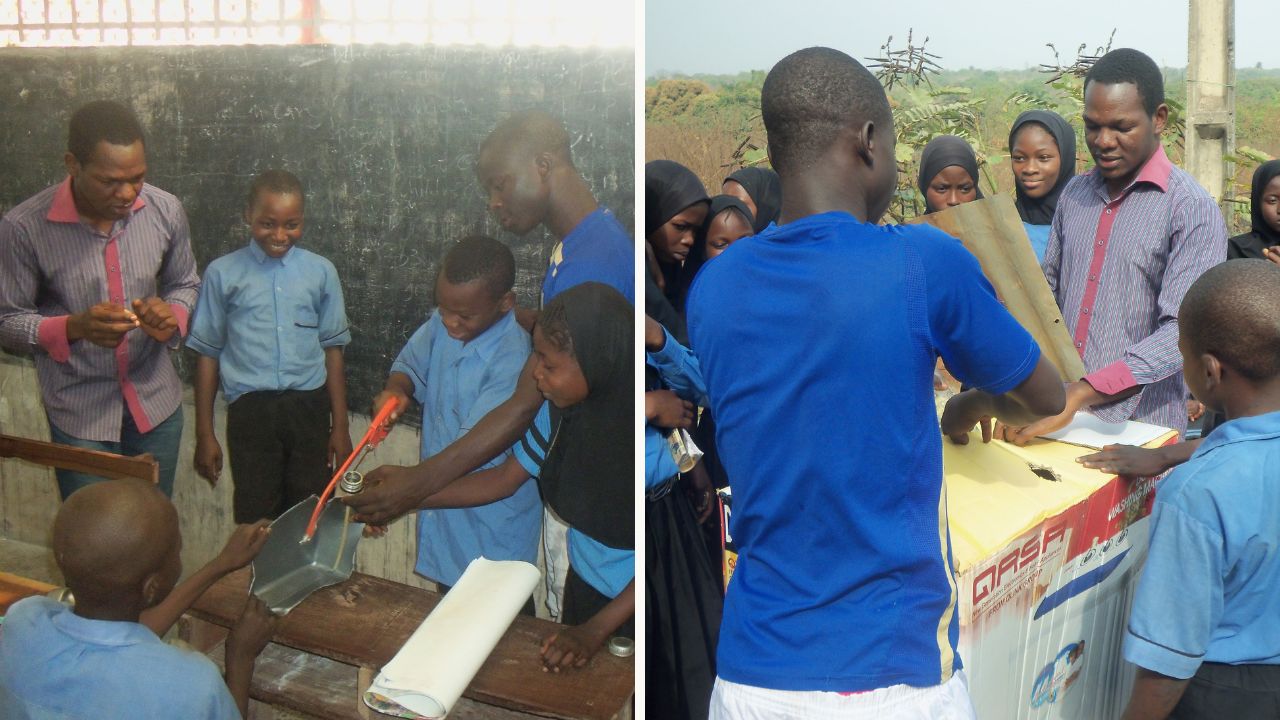
In what can be described as basic and rural, when I arrived, I felt as though I had walked back into my own childhood - especially the quiet nights in my room, where my curiosity was being polished. I found sharp brilliance and curious light in the eyes of the students in my class and in the community. I found something else; this one was hard to miss - I saw the same wide gap between what the schools were teaching and what real life was clearly asking for.
After a few months of curious watching, waiting, understanding the community and hoping for the best time to try something different, I gathered seven friends, and we pulled together 200+ students for two days of conversation about entrepreneurship and life in general. It worked far better than expected. But two days, as you can imagine, only created a spark, and you cannot warm a whole village with a spark. You need several floodlights of big lamps. I knew I needed real tools, and not only passion.
Prickling The Gifts, Not Needs.
So in 2015, I applied to kanthari International in India, a school that trains social entrepreneurs. For most of my life, I had told myself that scholarships were meant for extremely brilliant people, until the day I let myself just try. They selected me as one of three Nigerians for that year.
I returned to Nigeria and started Prikkle Academy.
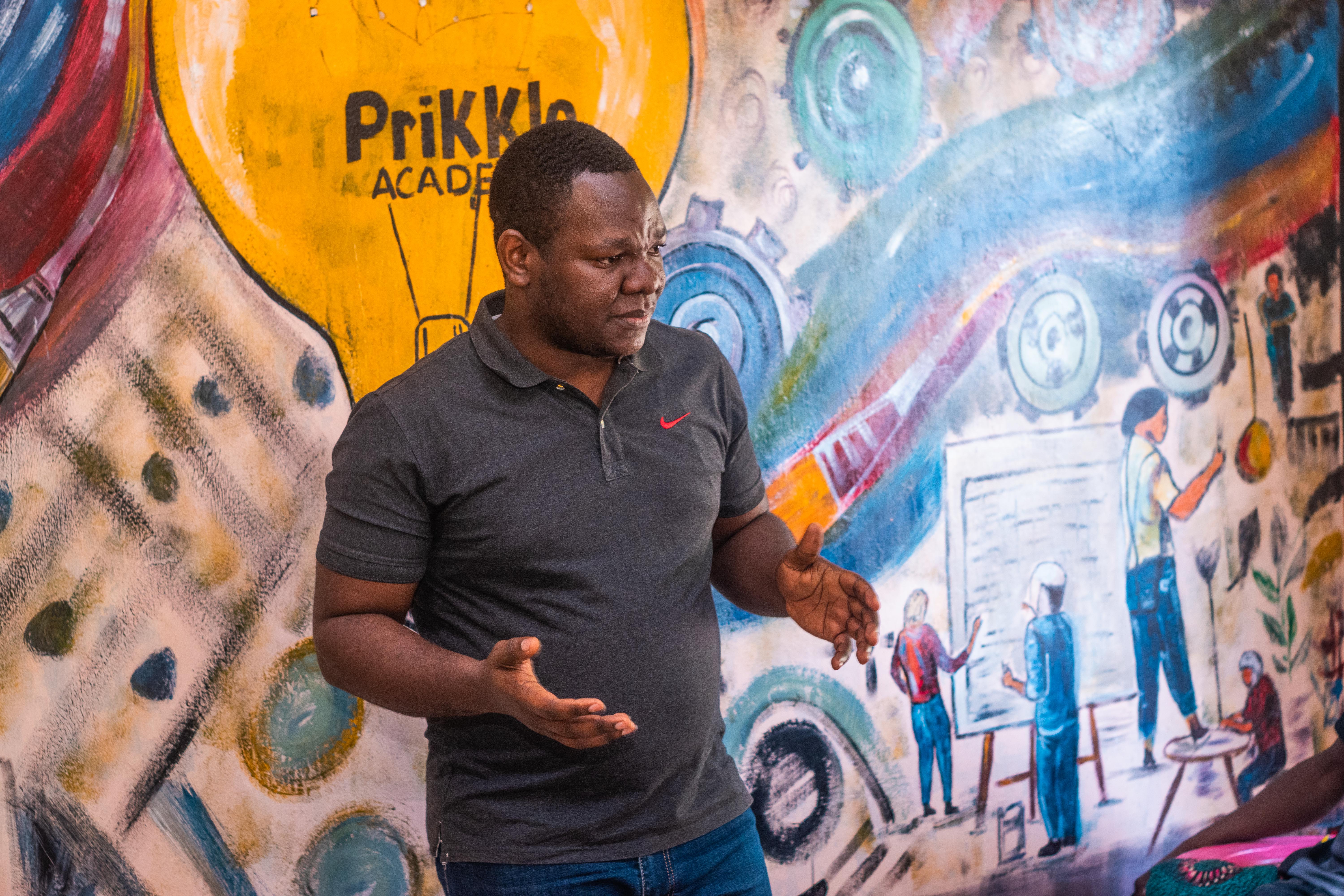
No, starting it wasn't that smooth like the 8-word sentence above, but the smoother part is that I returned to a nearby community where I met those sharp, brilliant students, just 1 year earlier.
The goal of Prikkle Academy is simple - If you can prick the gifts, skills and dreams of young people with the already existing assets in their environment, they can create sustainable personal and community solutions that they never imagined before.
The first community I started in is called Mbagishi, in Benue State, Nigeria. I sat with young people whose hands knew bamboo the way mine had once known midnight pages. Together, we built the first Bamboo Solar Lamp. Then, in the second community, called Afon, in Kwara State, Nigeria, we turned kitchen waste into organic manure, and we turned old tyres and tailor scraps into chairs strong enough to carry the weight of new dreams.
Honestly, those solutions had been quietly living in their hands long before Prikkle Academy showed up. All I did, with my team and the community youths, was help them see and make it happen. Yes, that's prickling gifts into solutions. That's what Prikkle Academy means.
Then, we had other prickling of gifts and skills in another community called Awowo, in Ogun State, Nigeria, and we had many other local solutions created through the previously existing ideas in the minds of the youths.
In 2017, we started in Afon, Kwara State, Nigeria, where we co-created a grassroots makerspace with the youths and the community people to turn more gifts, skills, ideas, and even abandoned community assets into useful and relevant solutions that now have global relevance.
Then I travelled to Kigali, Rwanda in 2019.
I had not planned to stay. I was visiting a friend, running a few training sessions, just having a basic adventure.
But Rwanda has a way of slowing your feet. I looked into the eyes of the young graduates I met in that city, and I saw the red flask of love. I saw the solar lamps of Mbagishi. I saw the organic transformation of Afon. The only difference is that the Rwandan versions of brilliant sparks had a Rwandan accent on them.
The same hunger. The same brilliance that no one had taken the time to name yet.
The same painful gap between certificates and careers. That was the moment I understood that Prikkle was never going to be only a Nigerian story. It was always a continental one.
So I started Prikkle Academy Rwanda to prick more young people with the same curiosity and tools that can help young people turn their gifts into solutions and decent careers, especially looking at education from where it starts (primary), all the way to how it shapes lives, in careers, and as a nation.
The Walk Between The Seen and Unseen.
On the surface, you see graduates without jobs. You see skills that don't match what employers say they want. You see brilliant people who have somehow been locked out of meaningful work. That part is real, and it is the part everyone keeps talking about.
When I take a walk further to check what may have caused this, I find shaky structures. Schools teach theory while life is asking for practice. Curricula that haven't been touched by the 21st century. Hiring systems that know how to read a CV for experience but have forgotten how to read a person for potential. Even when mentorship exists, it is underused. Even when the bridge from the classroom to the career exists, there are sharp edges that make it hard to climb.
I'm not satisfied; I took another walk further to see what may be influencing the structures, and I found the question about power dynamics. Who actually decides who gets the job? Too often, it is "who you know," and "what you can do" hardly gets a chance to speak. Young people are sitting outside the rooms where their own futures are being designed. Teachers sometimes sit outside those rooms, too. Power has gathered quietly into very few hands.
A few more steps further, below the power dynamics, I found something much deeper. I see belief systems, and it is a quiet, sticky, dangerous one. The belief that, at least with a degree, you should now be valuable. The belief that education is a finish line instead of a tool. The belief that creativity, soft skills, and the gifts of people who never sat in fancy classrooms simply don't count for very much.
This belief level is where the real fight lives.
You cannot fix unemployment by printing more degrees. You can start fixing it by changing what people believe about themselves and about what they already carry.
So when people ask me what Prikkle is, the easy answer is rarely the true one.
In Nigeria, some people used to think we are a bunch of jobless people, gathering trash and turning it into useful toys, turning used tyres into chairs, and sitting in circles thinking of useless solutions.
In Rwanda, some people used to think we are a job placement service, or CV writers, helping people ace their interviews.
Prikkle Academy is a rebellion against an old way of thinking.
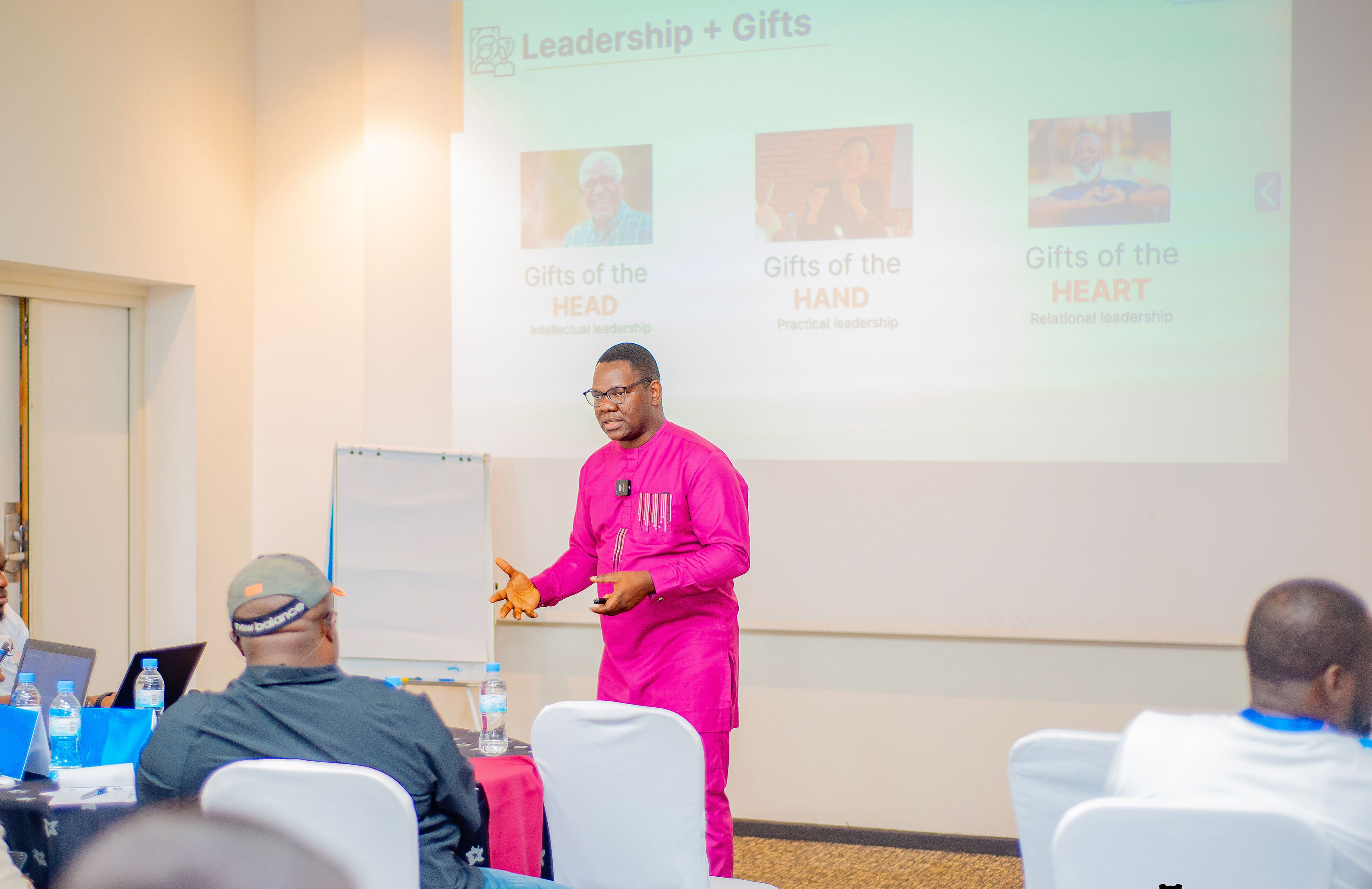
We work with everyone that matters in the Education ecosystem, especially the learners themselves, the teachers and the professionals produced by the system, and everyone else who is passionate and working towards turning learning into practical solutions.
We collaborate with them to know they are not empty; they are full. Full of gifts they have not even named yet. Full of skills, their community has waved past as ordinary. Full of curiosity, once they let it flourish, they can build solutions that professors are still busy debating in their laboratories.
We show them to look at what is strong before they stare at what is wrong. Because no one ever got hired for their weaknesses. No one ever built a real life out of the things they lacked.
Rather than tell, we show them that education is for becoming, for solutions, or it is for nothing at all. A school that does not produce problem-solvers has quietly lost its way. And we show them they are not alone.
Real careers grow in the soil of collaboration. Curiosity is the seed. Creativity is the rain. The harvest is the work you do together.
This is the ABC we teach in Rwanda: Awareness, Building career capital, Connection to jobs, careers and prosperity.
This is the ABCD we live in Nigeria: Asset-Based Community Development, the deep belief that every village, every classroom, and every single young person is already carrying the raw material of their own transformation.
Two countries. One conviction.
Wouldn't you love to join us on this journey, to rejig education and produce more problem-solving learners, educators and professionals?
Paryma Fellowship
-
Learn more about the Paryama Fellowship →
-
Get to know the Parayma Fellows →
-
Support the Parayma Fellows →
Seed, Root, Bloom, or Harvest?
Take the Quiz!
A short reflective quiz to find your season of changework.
Subscribe to The Changework Journal
Get first access to new offers, free or discounted tickets to events Nora speaks at, exclusive access to funding opportunities we source from our network (not shared anywhere else on our channels), and more!