A life between techno clubs and farming fields
Jul 03, 2026
I grew up in western Germany, in a small town called Geilenkirchen, close to Aachen. It’s pretty typical rural Western Germany. Loads of farmland, some lakes, and many small villages dotted around the landscape.
I grew up relatively poor in a German context. We never had to worry about food on the table, but if I wanted something, I had to earn the money for it and a high school year abroad like many of my friends did was out of the question.
For a long time, my main motivation was therefore simple: make money, be independent and have fun at the same time. At university in Maastricht, in the Netherlands, I tried many things. I organized weekends trips for exchange students. I helped run parties. I played poker semi-professionally and I experimented with small start-ups. Buying bikes from leaving exchange students and reselling them to the ones that have newly arrived 1 month later, was the most lucrative one.
Looking back, I wasn’t chasing wealth so much as freedom, the freedom not to worry, not to be dependent, not to feel constrained by circumstances.
Then, in 2010, during my exchange semester in South Africa, something shifted.
In Cape Town, I attended a TEDx talk about the Awethu Project, a social entrepreneurship initiative working in townships. I don’t remember every word, but I remember the sentence that landed and stayed:
“Doing well by doing good.”
It hit me with surprising force. Until then, I had unconsciously accepted that there was a trade-off: either you made money, or you did something meaningful. That talk cracked that assumption open.
The beginning of Love Foundation
When I returned to Maastricht, I couldn’t let it go and I organized the first- ever social entrepreneurship conference at my university. One of the speakers was Benjamin Adrion, the founder of Viva con Agua. His idea of making fundraising fun, using culture and parties to finance water projects, felt like a bridge between worlds I had kept separate.
I decided to try it myself.
Together with friends, I began organizing parties to fundraise money for water development projects in South Africa that we implemented together with Viva con Agua. It started playfully and experimentally but it grew in ways I never expected.
In the last semester of my bachelor’s degree, David Caspers, Marius Jopen and I founded the Love Foundation. Two years later, when I finished my master’s in psychology and entrepreneurship, Love Foundation was active in more than 20 cities worldwide, connecting over 500 volunteers under one shared identity.
It was chaotic, decentralized, messy, and alive.
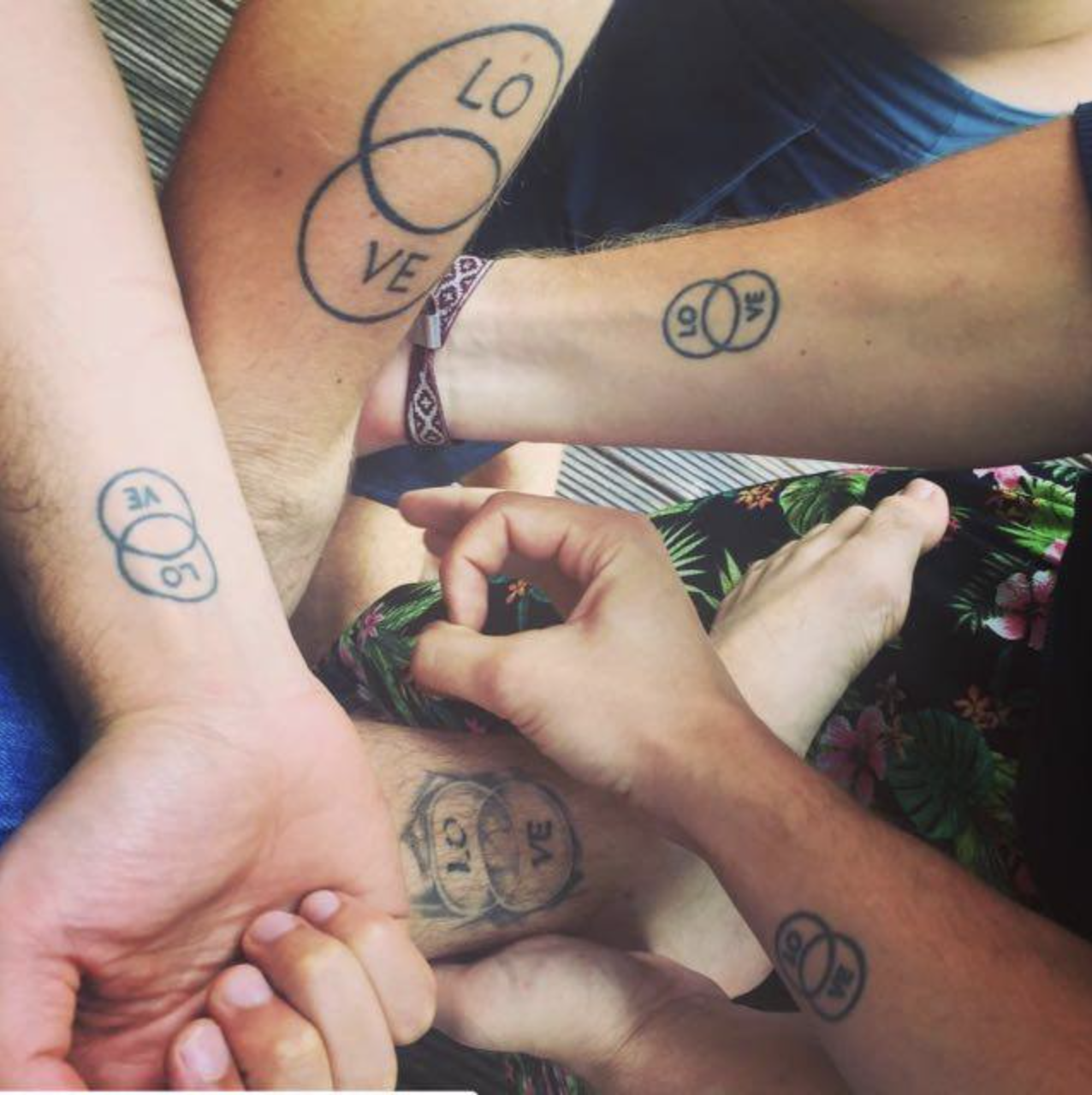
Some friends and I, all with Love Foundation tattoos, this is 5 of the 21 tattoos that I am aware of in the world :) Picture credit Nick Steiner
At the same time, I wrote my master’s thesis with Fairphone, titled “Going green to be seen.” That thesis turned into a job offer. Fairphone sold 80% of its first phones through crowdfunding to German-speaking supporters, and they needed someone to manage that community.
The Waterhouse years
I moved to Amsterdam, which became another turning point.
I worked at Fairphone during the week and continued growing Love Foundation alongside it.
At Fairphone, I met my colleague David Bartz, who introduced me to friends of his who were organizing underground parties. I also met Michael, who built his own Funktion-One-style sound systems and immediately loved the Love Foundation idea and so we all joined forces.
Together, we found an old warehouse with an outdoor area and water access, a former boat- building site and turned it into a cultural center called Waterhouse. We hosted concerts, art events, workshops, and 48-hour raves on weekends.
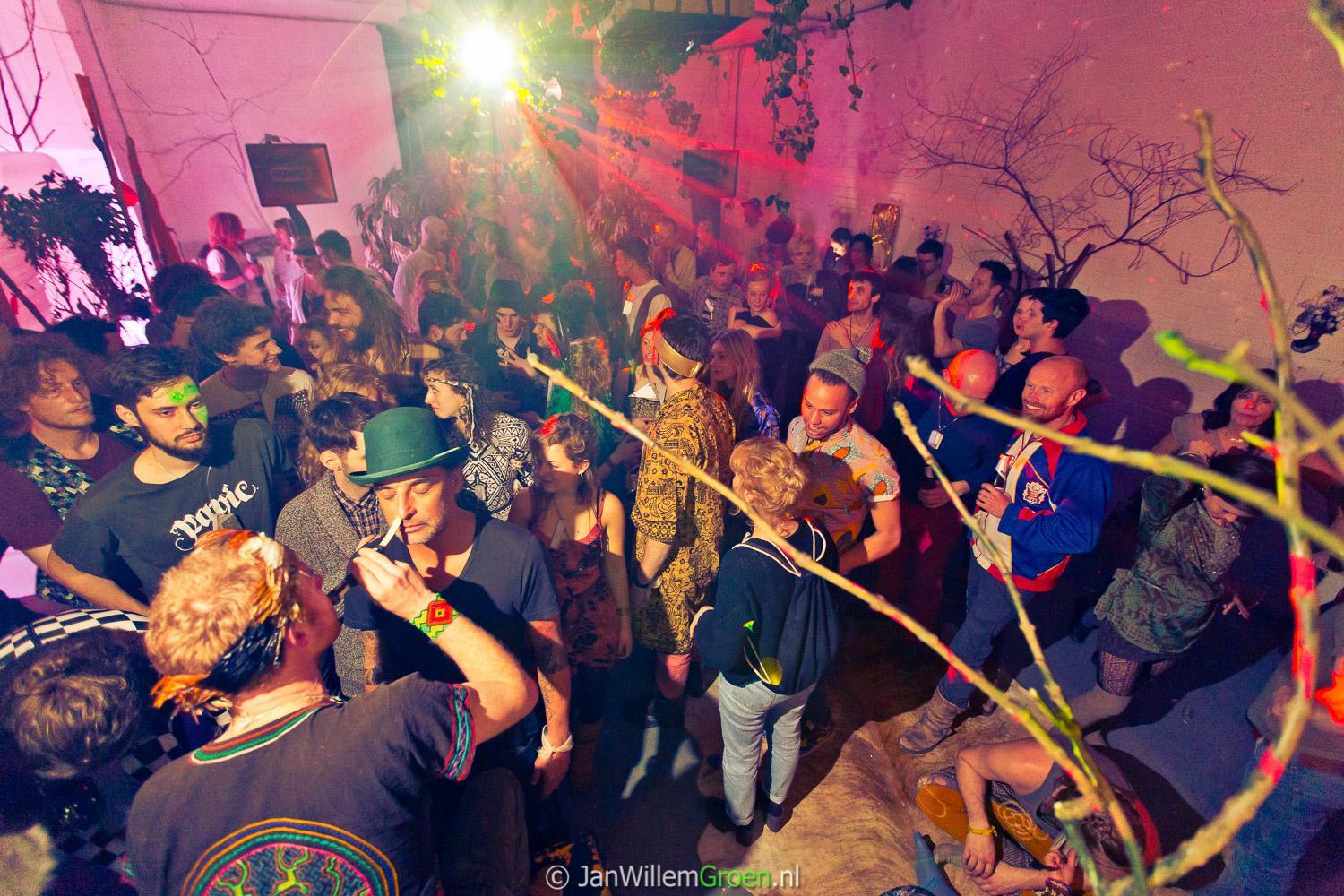
Waterhouse party in 2016, Picture Credit Jan Willem Groen
I lived there, practically. I negotiated with Fairphone to have Mondays off, working Tuesday to Friday. The rest of the time, I was at Waterhouse.
It was exhilarating. Creative. Intense. Also physically unsustainable to say the least. I think I slept less in that time than when becoming a dad many years later.
After three years, we had to close the club. Gentrification had arrived, our building owner sold to the municipality, and they tore down the building to make space for a new park for the new yuppies in the neighborhood. Fairphone had also grown from 12 to 85 people. Our CEO, Bas van Abel, burned out. And I realized something fundamental was missing from my life, nature.
How to start a village
Around that time, in the summer of 2017, I learned that Portugal had passed a law allowing people to rebuild abandoned houses without planning permission. Together with friends from Love Foundation, we went on the search for the perfect property for a community project and after 8 month searching we bought an abandoned village in central Portugal called Foz da Cova with several hectares of land around it. The village used to house around 40 people, but stood empty for more than 50 years and it had completely fallen apart. I loved the remoteness of it, though, the fact that there still was a village sign, and especially the beautiful river going through it with delicious mountain spring drinking water.
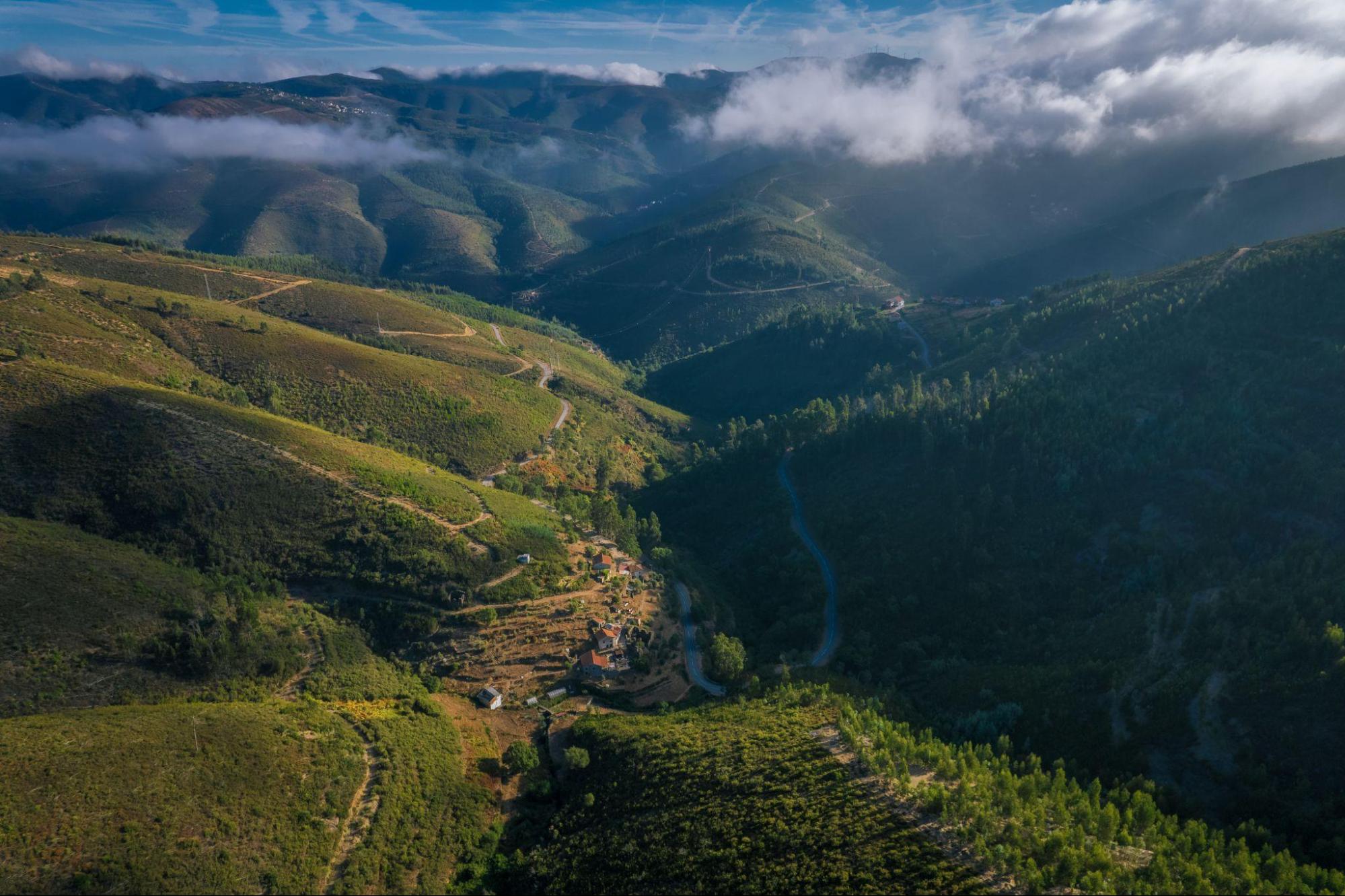
Foz da cova from above, September 2024
The decision to buy Foz da Cova brought me back to rural life and agriculture. While researching how we could best steward the land that we now owned, I first encountered regenerative agriculture.
What struck me was not just the environmental promise, but how many problems it touched at once: climate change, biodiversity loss, farmer livelihoods, mental health, rural decline. And yet, hardly anyone was talking about it.
Instead of starting something immediately, I went on what I can only describe as a pilgrimage. For a year, I visited regenerative farmers wherever I could find them in Western Europe, a total of 60 farms, in six countries.
Again and again, I encountered the same pattern: these farmers were pioneers, doing deeply meaningful work, often in isolation. They were solving problems society desperately needed solutions for, and yet they were largely unsupported, financially and socially. A great example is the one below, Herdade de Sao Luis with the farmer Francisco Alves. Francisco has 700 hectare of cork oaks, which were not in the best shape. He decided to replicate natural patterns and has now goats, cows, sheeps and pigs, which are being moved daily around the farm in order to behave as ruminants naturally would. Through this the gras is growing stronger, the trees are being fertilized naturally and the animals are living an amazing life. It was at this farm, where I decided to eat meat for the first time in 7 years. Since then I call myself farmterrian instead of vegetarian, so I only eat meat when I know the source where its coming from and when I support the farm and the farmer.
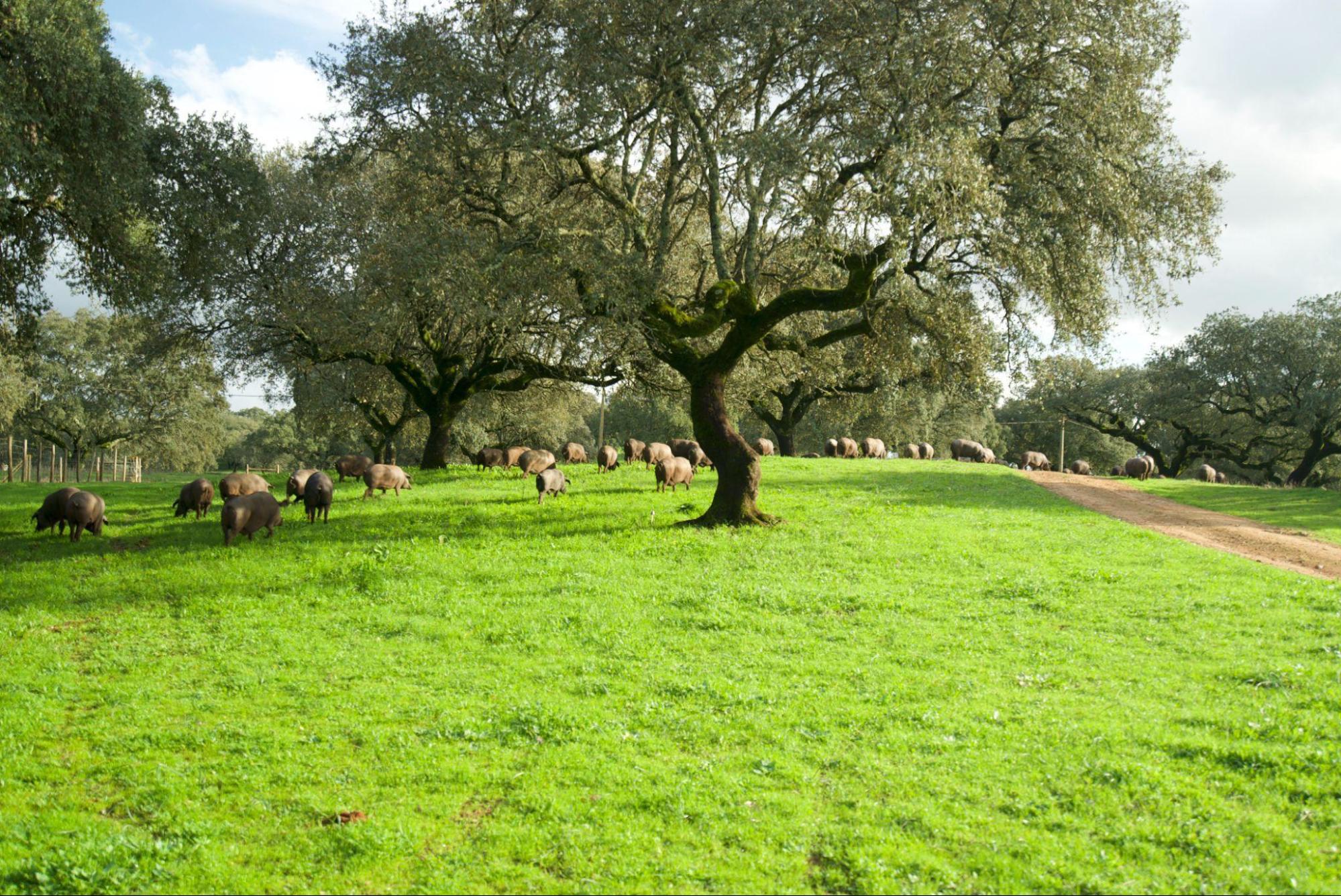
Herdade de Sao Luis in Portugal
The beginning of Climate Farmers
Fast forward to summer 2019, the hottest day ever measured in Berlin. I reconnected with Ivo Degn over some beers in Mauerpark. I had known Ivo for years through the Ashoka ChangemakerXchange network. We shared a conviction: regenerative agriculture needed to scale not as a rigid model, but as a movement supported by knowledge, community, and finance.
In 2020, we founded Climate Farmers together. Initially as a community of practice for farmers, where they could learn from each other how to do regenerative agriculture in their context. It then spread into a wild living organism, doing everything from conferences over carbon credits to systems maps.
At first, we thought no one would believe in us. Instead, friends from Love Foundation joined as volunteers. Momentum grew. In 2021, we won the Google Impact Challenge on Climate and received a €750,000 grant to build our carbon credit program along with coaching and training for our entire junior team.
We hired our first 10 employees. Then more. Climate Farmers grew to 35 people. The regenerative agriculture movement around us grew, too.
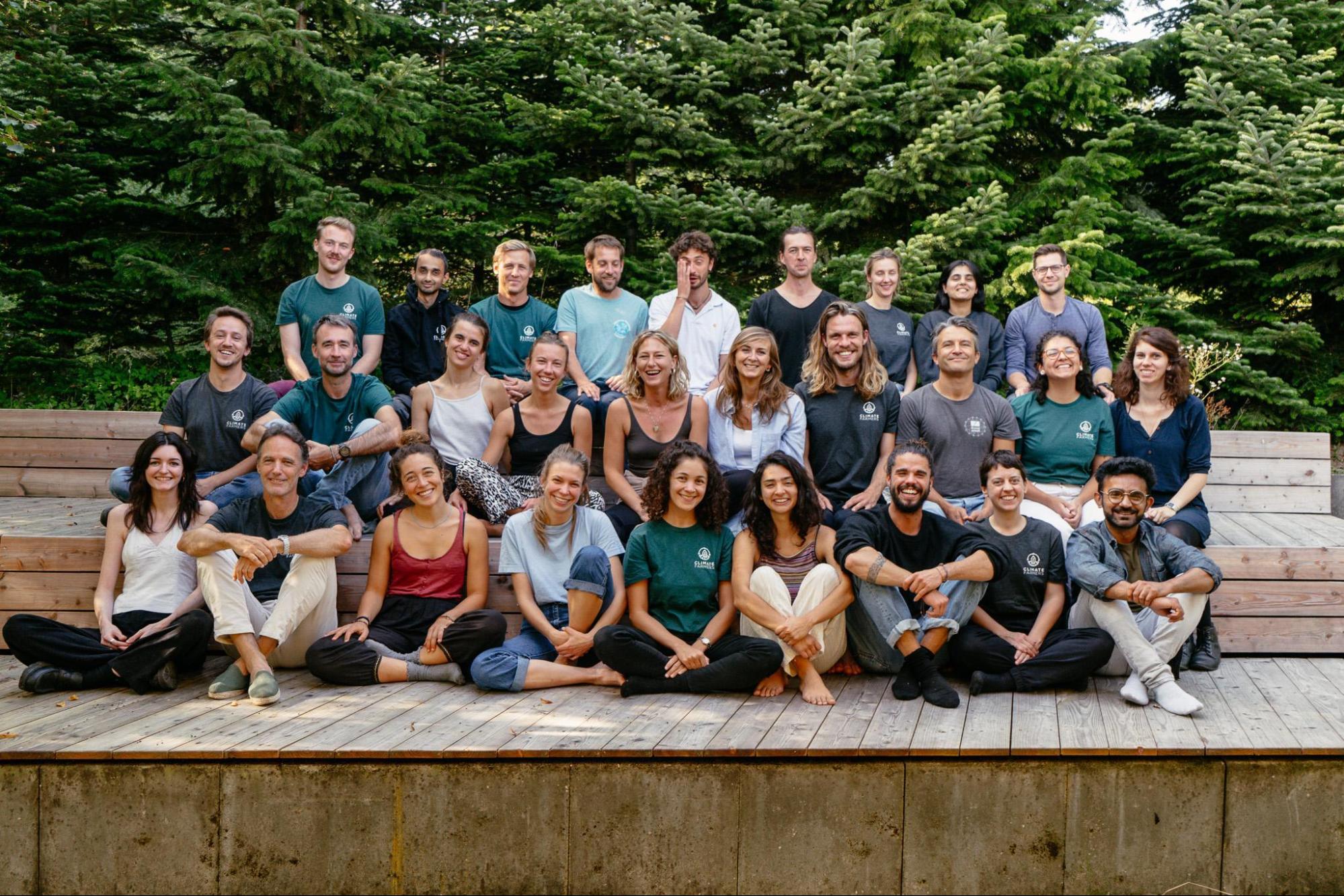
The Climate Farmers team in 2023
And with that growth came something I hadn’t fully anticipated.
Being “successful” as a founder turned out to mean more stress, more responsibility, and more sleepless nights.
Holding responsibility for 35 salaries is heavy. Trying to build a “regenerative work culture” while navigating human complexity is harder than any strategy document suggests. Allowing people to bring their full selves to work sounds beautiful until you are the one holding the emotional, financial, and legal consequences.
At the same time, my thinking deepened. I understood farmers don’t exist in isolation. They are embedded in a vast agrifood system shaped by policy, education, finance, and culture.
We shifted Climate Farmers’ mission from scaling regenerative agriculture to building a regenerative agrifood system in Europe. We created a systems map to make those dynamics visible.
And then my personal life shifted again.
Family Life
I met my Portuguese partner. We decided to have a family. My own father had been largely absent from my life, and I had made the promise to myself to be a present father and to make my family a priority.
I couldn’t reconcile that promise with a 70+ hour workweek.
So we made another hard choice and closed Climate Farmers’ carbon credit business. In the last few years Ivo and me both lost the enthusiasm about the carbon markets and wanted to focus on other parts of our organization. It was also the part with the highest salary cost and the highest stress level for the two of us. Closing it meant letting go of 20 of the 35 people and that was of course, very painful.
Four former employees took over the carbon credit work under a new organization, Terra Madre. Ivo started another organization called Re:Source to continue the work we started with the creation of the systems map. I stayed with the Climate Farmers core team of 12 people, smaller, focused, and aligned with what mattered most to me: our farmer community of practice, institutional education, and measuring ecosystem services beyond carbon.
Today, with this team, I work around 30 hours a week.
On Tuesday and Thursday mornings, I go to the forest school with my son.
On Fridays, I stop early to go swimming with him, and we are preparing for the arrival of our second child.
So my life has changed, and my priorities shifted, but the deep love for regenerative agriculture has stayed.
It brings together the farming landscapes of my childhood, the social entrepreneurship of my twenties, the systems thinking of my professional life, and the responsibility of being a parent.
I am pretty sure I will work within the wider field of regenerative agriculture for the rest of my life. I do hope to scale down the laptop work even further, my dream would be to spend 3-4 hours a day on the laptop and 3-4 hours a day working on my own land.
And yes, I will probably also always enjoy the occasional rave.
Paryma Fellowship
-
Learn more about the Paryama Fellowship →
-
Get to know the Parayma Fellows →
-
Support the Parayma Fellows →
Seed, Root, Bloom, or Harvest?
Take the Quiz!
A short reflective quiz to find your season of changework.
Subscribe to The Changework Journal
Get first access to new offers, free or discounted tickets to events Nora speaks at, exclusive access to funding opportunities we source from our network (not shared anywhere else on our channels), and more!