Changeworker of the Week #41: Mary Jane “MJ” Lamoste: Weaving Ocean Stories Through Community, Creativity and Care
Jun 26, 2026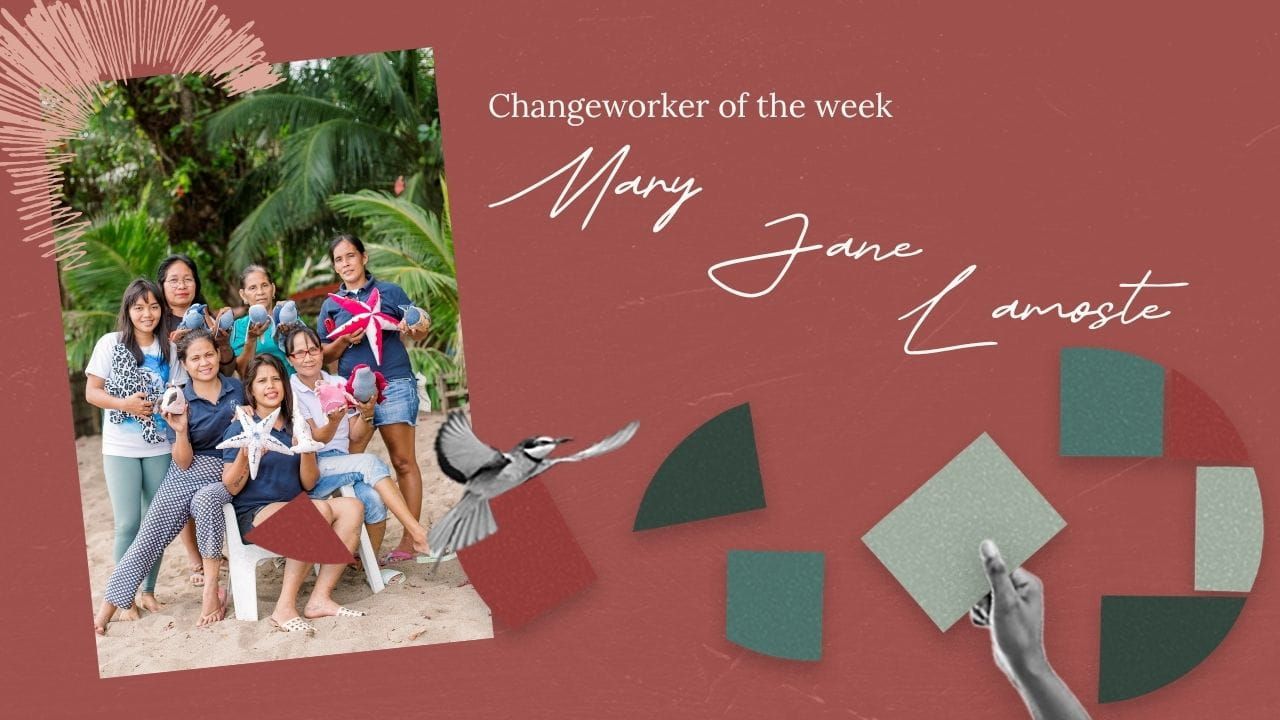
For Mary Jane “MJ” Lamoste, change often begins with things people overlook. As Founder of Tagpi-Tagpi and an ocean changeworker from the Philippines, MJ is helping weave together conservation, creativity, education, and livelihood in ways that honor both people and planet.
Her work reminds us that ocean conservation is not only about protecting ecosystems. It is also about supporting the communities whose lives are intertwined with them.
Through the #MyPieceForChange campaign, we invite people to share their unique contributions to collective transformation. This series exists to honor their stories, amplify their voices, and connect them with a wider community of like-minded peers. Today, we’re honored to introduce our Changeworker of the Week: Mary Jane “MJ” Lamoste whom we had the pleasure of interviewing for this special spotlight.
What’s your piece for change?
My piece for change is patchwork—bringing together people, stories, and materials that are often overlooked.
Through Tagpi-Tagpi, I work with women in coastal communities to transform discarded fabric into ocean-inspired pieces that support livelihoods, education, conservation, and ocean literacy. Each product becomes a way to tell stories about marine life, waste, women’s labor, and the communities connected to the sea. Through my work with Sustainable Ocean Alliance, I also support young ocean leaders across Asia-Pacific in connecting community realities with regional ocean advocacy. For me, change is not always one big heroic act. Sometimes, it begins with a piece of fabric, a mother holding a needle, a young person learning about the ocean, or a community story finally being heard.
What inspired you to begin this work or stay committed to it?
I was inspired by the women and communities I met while doing marine conservation work in coastal areas. As a marine biologist, I first entered these spaces through research, collecting data, studying sea turtles, sharks and rays, training young early career scientists, and learning about marine ecosystems. But the more time I spent in communities, the more I saw that ocean protection is deeply connected to people’s daily realities, especially women’s labor, livelihood, and dignity.
Tagpi-Tagpi began from this realization. I wanted to create something that could connect conservation with livelihood, storytelling, and creativity. What keeps me committed is seeing women transform discarded fabric into ocean-inspired pieces, young people learning about marine life through art, and communities recognizing that they are not only affected by environmental issues they are also part of the solution.
My work with Sustainable Ocean Alliance also keeps me grounded in a bigger movement. Supporting young ocean leaders across Asia-Pacific reminds me that change is possible when local stories, youth leadership, and collective advocacy come together.
What’s one hope or vision you hold for the future?
My hope is to see Tagpi-Tagpi’s model replicated in more coastal communities, especially in places where women’s labor, local creativity, and ocean knowledge are often overlooked. I envision Tagpi-Tagpi becoming a bridge between NGOs, community groups, and young ocean leaders amplifying the work already happening on the ground while supporting communities with livelihood, education, storytelling, and ocean literacy opportunities.
I also dream of creating more spaces where young ocean leaders can immerse themselves in communities, co-create projects, and learn from local realities beyond conferences or formal advocacy spaces. For me, the future of ocean leadership should be community-rooted, collaborative, and shaped with the people most connected to the sea.
What support or connection are you currently looking for?
I am currently looking for opportunities to co-create with designers, students, NGOs, conservation groups, schools, museums, and other organizations that believe in community-led ocean solutions. I am especially interested in partnerships that bring together creativity, research, storytelling, ocean literacy, and community work in ways that directly support coastal communities.
For Tagpi-Tagpi, this means collaborating on new product designs, educational materials, workshops, exhibitions, and community-based projects that can amplify both local stories and ocean conservation messages. I am also looking for support to replicate the Tagpi-Tagpi model in more coastal communities, expand market access for women-made upcycled products, and create more spaces where young ocean leaders can immerse, learn, and co-create with communities.
What’s one thing about your field or topic you wish more people knew, considered, or acted on?
I wish more people understood that ocean literacy is not only about knowing facts about the ocean or marine species. It is about understanding how the ocean is connected to our daily lives, livelihoods, culture, waste, climate, justice, and community wellbeing.
In many coastal communities, women, fisherfolk, youth, and local workers carry so much of the invisible labor connected to conservation and tourism, yet they are often left out of decision-making and benefit-sharing. If we want meaningful ocean protection, we need ocean literacy that is not only scientific, but also human, creative, and community-rooted.
Through Tagpi-Tagpi, ocean-inspired products become tools for storytelling. A sea turtle, whale shark, thresher shark, or deep-sea creature made from discarded fabric can open conversations about marine life, textile waste, women’s livelihoods, and the role of communities in conservation. For me, ocean literacy should help people not only learn about the ocean, but also care enough to act for it and for the people connected to it.
What practices, tools, or resources have supported you most on your changework journey?
Mentorship has been one of the most important supports in my changework journey. Having mentors helped me navigate the realities of building a social business, especially when trying to balance impact, sustainability, and community needs.
Working closely with community enablers has also shaped me deeply. It allowed me to connect environmental problems with personal stories, lived experiences, and community realities. It helped me understand that impact is not only about numbers or outputs, but also about trust, dignity, relationships, and the changes people are able to feel in their own lives.
Through the Yunus & Youth Fellowship, I had the opportunity to reassess what impact truly means in the social business world. I also had the chance to understand myself better through SHE Sparks PH and the SHE Leadership program, where I practiced Positive Intelligence and mental fitness. These tools have helped me deal with personal growth, leadership challenges, and the emotional demands of doing changework.
Youth volunteers have also been a huge part of this journey. Students and young creatives have shared their skills with Tagpi-Tagpi, from advocacy campaigns to brand awareness and storytelling. Having young people believe in our social enterprise and contribute their energy, creativity, and time has helped Tagpi-Tagpi grow organically and reminded me that changework is something we build together.
Can you share a moment or experience that deeply shaped the way you approach change today?
One experience that deeply shaped me was meeting Ate Rebecca from Apo Island while I was leading sea turtle research on the island. At the time, she supported our team by fetching water from the deep well and helping wash our bed linens. I was shocked to learn that she had recently given birth, yet she was carrying and delivering around 100 liters of water per trip to resorts and households, earning only about 150 pesos, or around 3 dollars, for each delivery. That moment stayed with me. Apo Island is known globally for its marine sanctuary, sea turtles, and tourism, yet women like Ate Rebecca were doing extremely difficult labor with very little recognition or income. It made me realize that conservation cannot be separated from the lives of the people who hold communities together.
Ate Rebecca may not be part of Tagpi-Tagpi today, but her story became one of the early moments that helped me understand why this work was needed. It shaped the heart of Tagpi-Tagpi: to create opportunities that recognize women’s skills, labor, dignity, and leadership in coastal communities. Since then, I have approached change not only through science or advocacy, but through care, livelihood, and community-rooted solutions.
What collective shift do you believe is needed for meaningful change to happen and what gives you hope that it’s possible?
I believe we need to shift from individual heroism to collective care and shared power. Meaningful change happens when communities are not treated only as beneficiaries, but as partners, knowledge holders, and leaders of solutions. In ocean conservation and social enterprise, this means creating more spaces where women, youth, fisherfolk, artisans, scientists, NGOs, and policymakers can co-create instead of working separately. It also means valuing local knowledge and lived experiences as much as technical expertise.
What gives me hope is seeing how much can grow when people believe in each other’s work. I have seen women artisans transform discarded fabric into ocean stories, students volunteer their skills to support Tagpi-Tagpi, and young ocean leaders across Asia-Pacific bring courage and creativity into advocacy spaces. These moments remind me that change is possible when we build it together.
How do you take care of your own energy or wellbeing while doing this work?
I take care of my energy by staying connected to nature, where my passion for conservation first began. I make time to go scuba diving and snorkelling, not only to be close to marine life, but also to slow down and notice the little things underwater. Diving feels like a different kind of therapy for me; it reminds me to breathe, observe, and be present.
As much as I love the ocean, I also find peace in caring for trees, tending to my organic garden, spending time in the forest, and imagining the future with these living spaces around me. I feel grounded by simple moments too, like walking along the beach during sunrise or sunset. These moments help me return to the reasons why I work in this space. They remind me that changework should not only be about urgency and output, but also about being rooted, present, and connected to the life we are trying to protect.
Where can people learn more about your work or connect with you?
People can learn more about my work through Tagpi-Tagpi and Sustainable Ocean Alliance.
- Instagram: @tagpi_tagpi or @mrayjn or @tagpiforest
- LinkedIn: Mary Jane Lamoste
- Email: [email protected]
- Website: https://maryjanelamoste.carrd.co
I would love to connect with people, organizations, designers, students, and communities interested in co-creating around ocean literacy, women’s livelihoods, upcycling, youth leadership, and community-led conservation.
The Parayma community is rooted in authentic, supportive relationships.
MJ’s changework reminds us that conservation is ultimately about relationships.
Relationships between people and ecosystems and between creativity and education.
Thank you, MJ, for sharing your thoughtful #PieceForChange.
If you’re working at the intersection of community, conservation, creativity, or ocean literacy, we’d love to hear your story.
Seed, Root, Bloom, or Harvest?
Take the Quiz!
A short reflective quiz to find your season of changework.
Subscribe to The Changework Journal
Get first access to new offers, free or discounted tickets to events Nora speaks at, exclusive access to funding opportunities we source from our network (not shared anywhere else on our channels), and more!